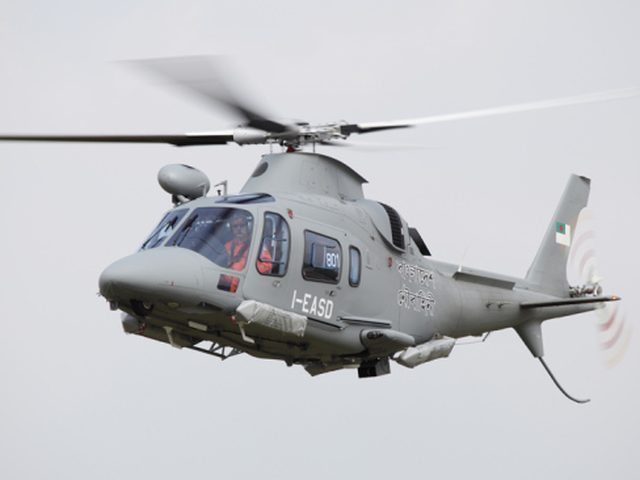
Leonardo Aw109
Twin Turboshaft
The Agusta A109 is a lightweight twin-engine helicopter that has become one of the most successful European rotorcraft designs since its first flight in 1971. Built by Leonardo (formerly AgustaWestland, originally Agusta), the A109 was designed from the outset as a high-performance civil helicopter with a sleek, streamlined fuselage and retractable landing gear, unusual features that give it exceptional speed and a distinctly elegant profile compared to its contemporaries. Its twin-turbine configuration provides single-engine safety margins that made it particularly attractive for over-water operations, executive transport, and medical evacuation missions where reliability is paramount. The A109 family has evolved through multiple variants, from the original A109A with Allison 250 engines to the A109E Power with Pratt & Whitney Canada PW206 turbines and the later A109 Grand and AW109 Trekker models. Maximum cruise speeds reach approximately 165 knots, with a never-exceed speed of 177 knots and a service ceiling around 20,000 feet, making it one of the faster light twins in its class. The helicopter's eight-seat cabin (typically configured for six passengers plus two crew, or as an air ambulance with two stretchers) and IFR certification have made it a favorite for emergency medical services, particularly in North America and Europe. Law enforcement agencies also prize the type for its speed and endurance on patrol missions. The A109's military cousin, the A129 Mangusta, shares much of the same dynamic system, but the civil A109 remains focused on utility and VIP roles. Its combination of performance, twin-engine safety, and relatively compact size has kept it in continuous production for over five decades, a rare achievement in the rotorcraft world. SkyMeter has tracked 435 flights across 124 airframes and 35 operators, with NORTH MEMORIAL HEALTH CARE the largest observed operator.
Safety in context
The incident rate counts flights with ANY safety event detected by SkyMeter: go-arounds (a routine response, not a failure), unstable-approach gate flags (advisory thresholds), rejected takeoffs (the system working as designed), and runway events. It is NOT an accident rate or fatality rate. For accident statistics, refer to the NTSB Aviation Accident Database (USA) or the Aviation Safety Network. See methodology for what each event type measures.
Performance
Speed envelope & approach
Dimensions
Airframe geometry
Weight & identification
Operating limits
Top operators
By fleet size · last 7 days


Safety profile
Flagged flights · last 7 days
Family
Related variants
Recent flights
Real flights of A109 · airborne ≥ 20 min


