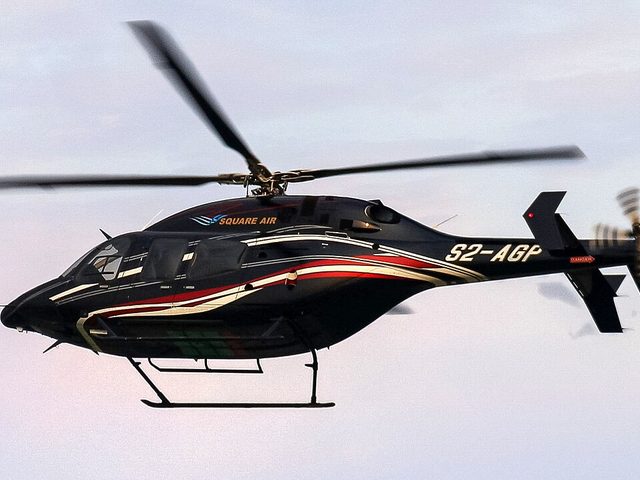
Bell 429 Globalranger
Twin Turboshaft
The Bell 429 GlobalRanger is a modern twin-engine light utility helicopter that entered service in 2009, designed to bridge the gap between light singles and medium twins in the civil helicopter market. Bell developed the 429 with fully integrated Garmin G1000H avionics from the outset, making it one of the first helicopters certified with a glass cockpit as standard equipment. Its distinctive four-blade composite main rotor system and FADEC-controlled Pratt & Whitney Canada PW207D1 engines deliver exceptional hot-and-high performance while maintaining single-engine safety margins that appeal to operators in demanding environments. The GlobalRanger's spacious flat-floor cabin accommodates up to seven passengers or can be rapidly reconfigured for air medical missions, corporate transport, law enforcement, or utility work. With a maximum cruise speed of 142 knots and a range exceeding 370 nautical miles, the 429 competes directly with the Airbus H135 and AgustaWestland AW139 in different weight classes. Its skid landing gear keeps acquisition costs lower than wheeled competitors while the wide cabin doors and flat floor simplify loading operations. The type has found particular success in North American emergency medical services, where its speed, range, and IFR capability make it ideal for critical care transport. Bell's decision to incorporate damage-tolerant composite structures throughout the airframe reduces maintenance costs and extends component life compared to earlier metal designs. The 429's never-exceed speed of 155 knots and service ceiling of 20,000 feet provide operational flexibility across diverse missions from sea-level offshore operations to mountain rescue at altitude. SkyMeter has tracked 966 flights across 203 airframes and 82 operators, with LIFE FLIGHT NETWORK LLC the largest observed operator.
Safety in context
The incident rate counts flights with ANY safety event detected by SkyMeter: go-arounds (a routine response, not a failure), unstable-approach gate flags (advisory thresholds), rejected takeoffs (the system working as designed), and runway events. It is NOT an accident rate or fatality rate. For accident statistics, refer to the NTSB Aviation Accident Database (USA) or the Aviation Safety Network. See methodology for what each event type measures.
Performance
Speed envelope & approach
Dimensions
Airframe geometry
Weight & identification
Operating limits
Top operators
By fleet size · last 7 days


Safety profile
Flagged flights · last 7 days
Family
Related variants
Recent flights
Real flights of B429 · airborne ≥ 20 min


