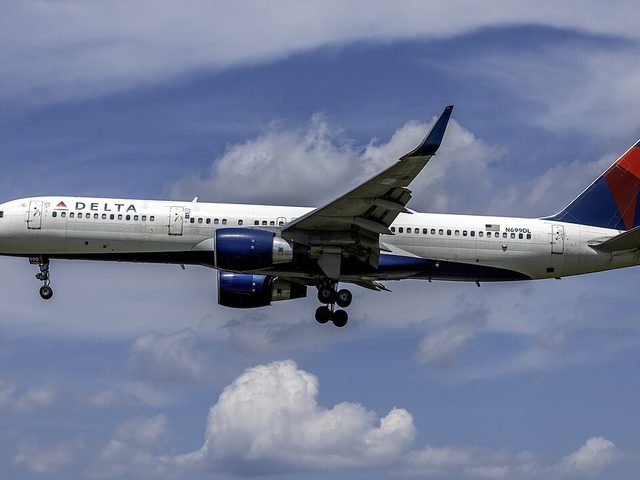
Boeing 757-200
Twin Jet· 474 globally registered
The Boeing 757-200 is a narrow-body twinjet that earned a reputation as one of the most versatile and powerful single-aisle airliners ever built. Introduced in 1983, the 757 was designed to replace aging 727 trijets and early 707s on medium-haul routes, but its exceptional thrust-to-weight ratio and hot-and-high performance made it a favorite for challenging airports from La Paz to Kathmandu. With a range exceeding 3,900 nautical miles, the 757-200 could operate transcontinental U.S. routes and transatlantic flights to secondary European cities, a capability unmatched by contemporaries like the 737 Classic. Its powerful engines, either Rolls-Royce RB211 or Pratt & Whitney PW2000 series, gave it climb performance rivaling much larger aircraft, and pilots praised its handling characteristics and cockpit commonality with the 767. Boeing built 913 examples of the 757-200 between 1981 and 2004, making it by far the most popular variant of the 757 family. While passenger operations have declined as airlines transitioned to more fuel-efficient types like the 737 MAX and A321neo, the 757-200 found a strong second career as a freighter. Its large cargo door, long fuselage, and ability to operate from shorter runways made it ideal for express package carriers, and both factory-built 757-200PF (package freighter) and passenger-to-freighter conversions remain workhorses for UPS, FedEx, and DHL. The type's operational ceiling of 42,000 feet and maximum operating speed of Mach 0.86 keep it competitive on time-sensitive cargo routes where speed and reliability matter more than fuel burn. Despite production ending two decades ago, the 757-200 remains a common sight at airports worldwide, particularly in cargo livery. Its unique silhouette (a long, slender fuselage with a distinctive nose profile) and the unmistakable roar of its high-bypass turbofans make it instantly recognizable on approach. SkyMeter has tracked 4,472 flights across 384 airframes and 27 operators, with DELTA AIR LINES INC the largest observed operator.
Safety in context
The incident rate counts flights with ANY safety event detected by SkyMeter: go-arounds (a routine response, not a failure), unstable-approach gate flags (advisory thresholds), rejected takeoffs (the system working as designed), and runway events. It is NOT an accident rate or fatality rate. For accident statistics, refer to the NTSB Aviation Accident Database (USA) or the Aviation Safety Network. See methodology for what each event type measures.
Performance
Speed envelope & approach
Dimensions
Airframe geometry
Weight & identification
Operating limits
Top operators
By fleet size · last 7 days


Safety profile
Flagged flights · last 7 days
Family
Related variants
Recent incidents
Flagged flights of B752

Recent flights
Real flights of B752 · airborne ≥ 20 min


