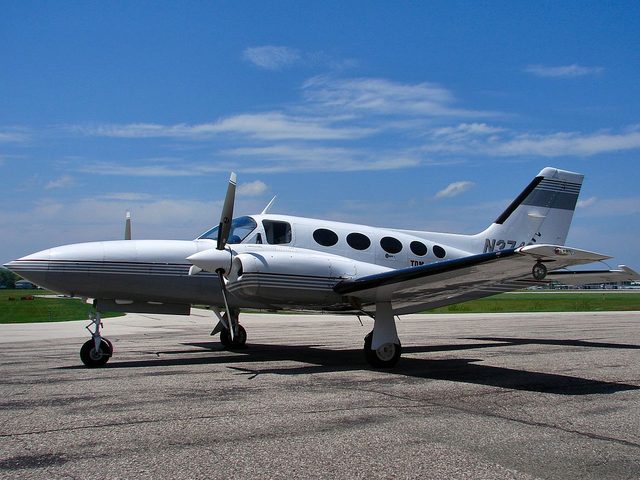
Cessna Golden Eagle 421
Twin Piston· 741 globally registered
The Cessna 421 Golden Eagle represents the pinnacle of Cessna's piston-twin line, introduced in 1967 as the company's first pressurized light twin. With its distinctive geared Continental GTSIO-520 engines and cabin pressurization differential of 5.0 psi, the 421 carved out a unique niche between unpressurized twins and turboprops, offering business travelers and cargo operators the ability to cruise comfortably at altitudes up to 30,000 feet while burning avgas instead of jet fuel. The Golden Eagle became particularly popular for air ambulance work, corporate transport, and specialized missions requiring pressurized cabin comfort without turbine operating costs. Cessna produced the 421 through three main variants over nearly two decades. The original 421 gave way to the 421B in 1976 with improved systems and aerodynamics, and finally the 421C Golden Eagle III in 1976, which featured a new wet wing eliminating the distinctive wingtip fuel tanks of earlier models. The C model's increased fuel capacity and refined handling made it the most sought-after variant. Maximum cruise speeds reached 240 knots true airspeed at altitude, with typical missions flown in the 200-220 knot range. The aircraft's 1,200-nautical-mile range with reserves made it a capable cross-country machine, though the geared engines required careful management and regular maintenance to avoid costly overhauls. Today the 421 remains active in diverse roles from cargo feeders to survey platforms, valued for its spacious cabin, pressurization, and known-quantity piston reliability despite maintenance demands. The type's pressurized comfort and relatively modest operating costs compared to turboprops keep it economically viable for operators who can manage the engine maintenance schedule. SkyMeter has tracked 453 flights across 157 airframes and 151 operators, with Hrycay Consulting Engineers Inc. the largest observed operator.
Safety in context
The incident rate counts flights with ANY safety event detected by SkyMeter: go-arounds (a routine response, not a failure), unstable-approach gate flags (advisory thresholds), rejected takeoffs (the system working as designed), and runway events. It is NOT an accident rate or fatality rate. For accident statistics, refer to the NTSB Aviation Accident Database (USA) or the Aviation Safety Network. See methodology for what each event type measures.
Performance
Speed envelope & approach
Dimensions
Airframe geometry
Weight & identification
Operating limits
Top operators
By fleet size · last 7 days


Safety profile
Flagged flights · last 7 days
Family
Related variants
Recent incidents
Flagged flights of C421


Recent flights
Real flights of C421 · airborne ≥ 20 min


