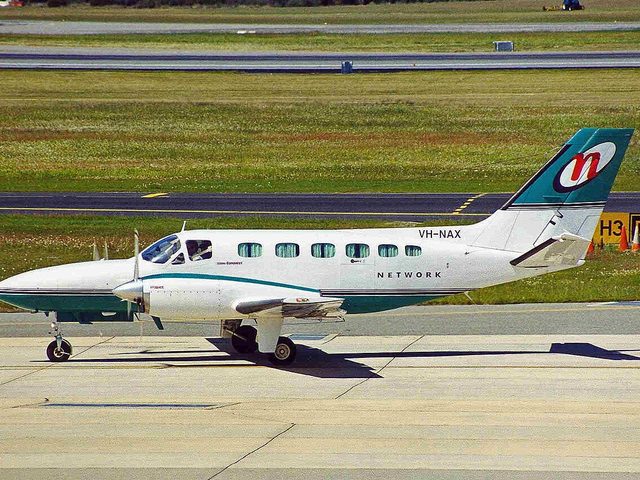
Cessna Conquest
Twin Turboprop· 172 globally registered
The Cessna 441 Conquest II is a pressurized twin-turboprop business aircraft that represented Cessna's ambitious push into the cabin-class turboprop market during the late 1970s. Manufactured from 1977 to 1986, the Conquest II was designed to bridge the gap between light twins and larger corporate jets, offering jet-like cabin comfort with turboprop economics. Powered by two Garrett TPE331-8 engines producing 635 shaft horsepower each, the aircraft featured a distinctive T-tail configuration and could cruise at 270 knots while carrying up to nine passengers in a pressurized cabin. What set the Conquest II apart was its rugged construction and impressive high-altitude performance for its class. The aircraft could reach a maximum operating altitude of 35,000 feet and offered a range of approximately 1,400 nautical miles with reserves, making it competitive with entry-level jets for many missions. The pressurization system maintained a sea-level cabin up to 12,400 feet, providing genuine comfort on transcontinental flights. However, the type earned a reputation for being maintenance-intensive, particularly regarding its landing gear system and engine accessories, which contributed to relatively high operating costs compared to simpler turboprops. Despite production ending in 1986 after just 362 aircraft were built, the Conquest II remains popular among owner-operators and small charter companies who value its spacious cabin, speed, and ability to operate from shorter runways than comparable jets. The type continues to serve in corporate, air ambulance, and cargo roles worldwide, with many airframes having been upgraded with modern avionics including glass cockpits. SkyMeter has tracked 444 flights across 91 airframes and 77 operators over routes, with SURDEX CORP the largest observed operator.
Safety in context
The incident rate counts flights with ANY safety event detected by SkyMeter: go-arounds (a routine response, not a failure), unstable-approach gate flags (advisory thresholds), rejected takeoffs (the system working as designed), and runway events. It is NOT an accident rate or fatality rate. For accident statistics, refer to the NTSB Aviation Accident Database (USA) or the Aviation Safety Network. See methodology for what each event type measures.
Performance
Speed envelope & approach
Dimensions
Airframe geometry
Weight & identification
Operating limits
Top operators
By fleet size · last 7 days


Safety profile
Flagged flights · last 7 days
Family
Related variants
No related variants.
Recent incidents
Flagged flights of C441


Recent flights
Real flights of C441 · airborne ≥ 20 min
