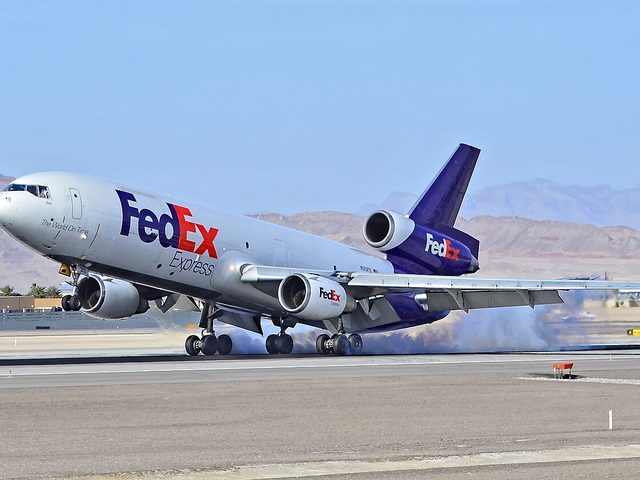
Boeing-Mcdonnell Douglas Boeing (Douglas) Dc 10-10/30/40
Tri Jet· 76 globally registered
The McDonnell Douglas DC-10 was the world's second widebody trijet, entering service in 1971 as American Airlines' answer to the Boeing 747 on transcontinental routes. Its distinctive three-engine configuration (two wing-mounted turbofans plus a third embedded in the vertical stabilizer) gave it exceptional range and hot-and-high performance, making it a workhorse on long-haul routes from Los Angeles to Honolulu and across the Atlantic. The DC-10-30 variant, with its 6,220-nautical-mile range and 555,000-pound maximum takeoff weight, could carry 380 passengers nonstop from New York to Tokyo, a capability that made it a favorite of international carriers throughout the 1970s and 1980s. Though early accidents led to design modifications and intense scrutiny, the type matured into a reliable platform that logged millions of flight hours across passenger, cargo, and military tanker roles. The DC-10's high cruising speed of Mach 0.88 and 42,000-foot service ceiling kept it competitive with twin-engine widebodies well into the 1990s. Today the type survives primarily as a freighter and aerial firefighting tanker, with operators converting retired passenger frames for cargo and fire-suppression missions. The DC-10's rugged airframe and powerful General Electric CF6 or Pratt & Whitney JT9D engines give it the payload capacity and performance needed for heavy-lift operations that newer twins cannot always match economically. SkyMeter has tracked 7 flights across 4 airframes and 3 operators over routes, with AIRCRAFT ENDEAVORS LLC (OME) the largest observed operator.
Safety in context
The incident rate counts flights with ANY safety event detected by SkyMeter: go-arounds (a routine response, not a failure), unstable-approach gate flags (advisory thresholds), rejected takeoffs (the system working as designed), and runway events. It is NOT an accident rate or fatality rate. For accident statistics, refer to the NTSB Aviation Accident Database (USA) or the Aviation Safety Network. See methodology for what each event type measures.
Performance
Speed envelope & approach
Dimensions
Airframe geometry
Weight & identification
Operating limits
Top operators
By fleet size · last 7 days


Safety profile
Flagged flights · last 7 days
Family
Related variants
No related variants.
Recent incidents
Flagged flights of DC10

Recent flights
Real flights of DC10 · airborne ≥ 20 min

