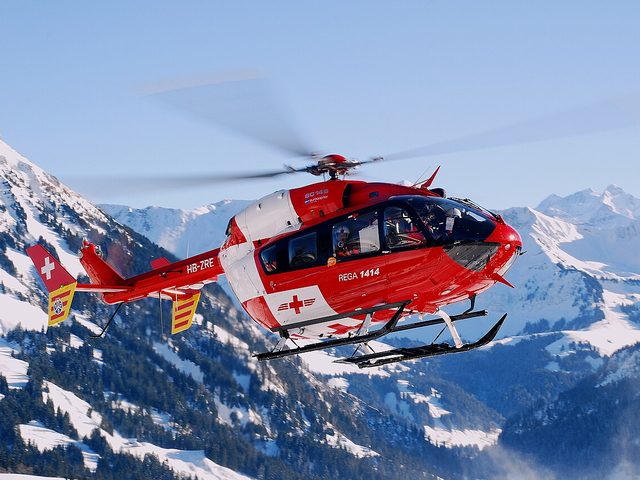
Airbus Helicopters H145/Ec145
Twin Turboshaft
The Airbus Helicopters EC145 is a twin-engine medium utility helicopter that has become the gold standard for helicopter emergency medical services across North America and Europe since its introduction in 1999. Originally developed as the BK 117 C-2 through a collaboration between MBB in Germany and Kawasaki in Japan, the type was rebranded EC145 after Eurocopter's formation and is now marketed as the H145 following Airbus Helicopters' 2014 nomenclature change. Its defining characteristic is exceptional hot-and-high performance combined with a spacious cabin that can accommodate two stretchers, making it ideal for air ambulance operations in challenging terrain. Powered by two Turbomeca Arriel 1E2 or 2E turboshaft engines, the EC145 delivers 738 shaft horsepower per engine and features a hingeless Fenestron tail rotor that reduces noise and improves safety around ground personnel. The helicopter's maximum cruise speed reaches 150 knots with a never-exceed velocity of 155 knots, and it can operate at altitudes up to 20,000 feet with a service ceiling advantage over many competitors in its class. Its 370-nautical-mile range and ability to carry up to nine passengers or 3,600 pounds of cargo externally have made it equally popular for offshore oil support, law enforcement, and corporate transport roles. The EC145 family has accumulated over 6 million flight hours worldwide, with more than 1,500 aircraft delivered. Military variants serve with Germany's Bundeswehr and the U.S. Army's UH-72 Lakota fleet, while civilian operators prize its IFR certification, autopilot capability, and low vibration levels that reduce crew fatigue on long missions. The latest H145 variants introduced a five-bladed main rotor in 2019, further improving payload capacity and reducing vibration, though earlier four-bladed EC145 models remain the backbone of many air medical fleets. SkyMeter has tracked 3,161 flights across 723 airframes and 90 operators, with AIR METHODS LLC the largest observed operator.
Recent in the news
All news →- Crash Sep 10, 2026
NTSB set to interview two pilots of Sunday's deadly cargo plane crash in Miami | Videos - KTVN
Safety in context
The incident rate counts flights with ANY safety event detected by SkyMeter: go-arounds (a routine response, not a failure), unstable-approach gate flags (advisory thresholds), rejected takeoffs (the system working as designed), and runway events. It is NOT an accident rate or fatality rate. For accident statistics, refer to the NTSB Aviation Accident Database (USA) or the Aviation Safety Network. See methodology for what each event type measures.
Performance
Speed envelope & approach
Dimensions
Airframe geometry
Weight & identification
Operating limits
Top operators
By fleet size · last 7 days


Safety profile
Flagged flights · last 7 days
Family
Related variants
No related variants.
Recent flights
Real flights of EC45 · airborne ≥ 20 min


