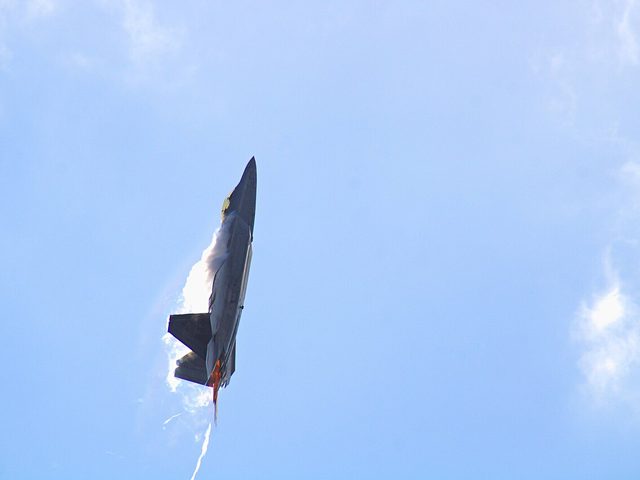
Lockheed Martin L-645 Raptor
Twin Jet· 183 globally registered
The Lockheed Martin F-22 Raptor is the world's first operational fifth-generation fighter, combining stealth, supercruise, advanced avionics, and extreme maneuverability in a single airframe. Entering service with the United States Air Force in 2005 after decades of development, the F-22 was designed to achieve air dominance against any adversary through a revolutionary blend of low-observable technology and sensor fusion that allows it to detect, track, and engage threats long before being detected itself. Its twin Pratt & Whitney F119 engines enable sustained supersonic flight without afterburner (supercruise at approximately Mach 1.8), a capability unmatched by previous fighter generations and critical for maintaining tactical advantage while conserving fuel. The Raptor can reach speeds exceeding Mach 2.25 and operate at altitudes above 65,000 feet, giving it both speed and altitude superiority over nearly all contemporary aircraft. Beyond raw performance, the F-22's thrust-vectoring nozzles provide post-stall maneuverability that defies conventional aerodynamic limits, making it lethally effective in close-range engagements despite being optimized for beyond-visual-range combat. Its radar cross-section is among the smallest of any fighter ever built, and its integrated avionics suite fuses data from multiple sensors to present pilots with unprecedented situational awareness. Only 195 production aircraft were built before the line closed in 2011, making the F-22 one of the most exclusive fighters in service. The type remains restricted to U.S. operations under federal export laws, and its combination of stealth, speed, and agility continues to define the benchmark for air superiority more than two decades after its introduction.
Safety in context
The incident rate counts flights with ANY safety event detected by SkyMeter: go-arounds (a routine response, not a failure), unstable-approach gate flags (advisory thresholds), rejected takeoffs (the system working as designed), and runway events. It is NOT an accident rate or fatality rate. For accident statistics, refer to the NTSB Aviation Accident Database (USA) or the Aviation Safety Network. See methodology for what each event type measures.
Performance
Speed envelope & approach
Dimensions
Airframe geometry
Weight & identification
Operating limits
Top operators
By fleet size · last 7 days
No operator data available.
Safety profile
Flagged flights · last 7 days
No safety data available.
Family
Related variants
No related variants.
Recent flights
Real flights of F22 · airborne ≥ 20 min
No recent flights match these filters.