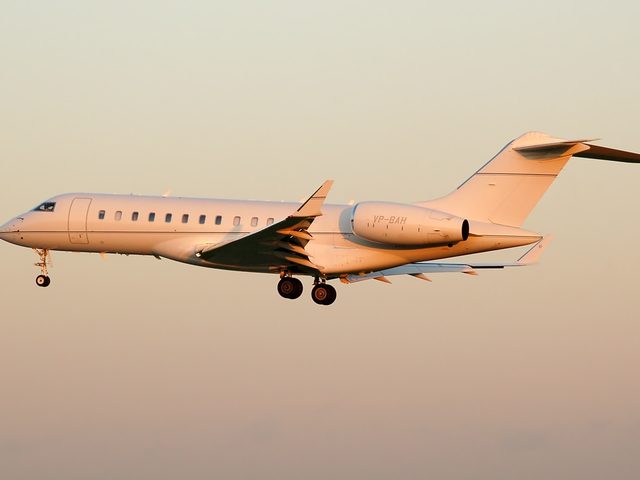
Bombardier Bd-700 Global Express
Twin Jet· 305 globally registered
The Bombardier Global Express was the first purpose-built ultra-long-range business jet when it entered service in 1999, designed to fly eight passengers nonstop from New York to Tokyo or London to Singapore without refueling. Powered by twin Rolls-Royce BR710 turbofans, the Global Express pioneered the stand-up cabin and transcontinental range in the large-cabin business jet category, establishing Bombardier as a serious competitor to Gulfstream in the top tier of corporate aviation. Its clean-sheet design featured a supercritical wing optimized for high-altitude cruise and a fuselage wide enough for a full galley and enclosed lavatory, luxuries previously unavailable on jets with 6,500-nautical-mile legs. The type's Mach 0.89 cruise speed and 51,000-foot ceiling made it one of the fastest and highest-flying business jets of its generation, capabilities that remain competitive decades later. Subsequent variants (the XRS, 5000, 6000, and 7500) have stretched the range envelope even further, but the original Global Express established the template for modern intercontinental business aviation. Its reliability and dispatch rate made it a favorite among charter operators and fractional ownership programs, while its spacious cabin attracted heads of state and Fortune 500 flight departments. The Global Express also serves in military and government roles, including the Royal Canadian Air Force CC-144 Challenger variant used for VIP transport. SkyMeter has tracked 1,368 flights across 405 airframes and 140 operators, with TVPX AIRCRAFT SOLUTIONS INC TRUSTEE the largest observed operator.
Safety in context
The incident rate counts flights with ANY safety event detected by SkyMeter: go-arounds (a routine response, not a failure), unstable-approach gate flags (advisory thresholds), rejected takeoffs (the system working as designed), and runway events. It is NOT an accident rate or fatality rate. For accident statistics, refer to the NTSB Aviation Accident Database (USA) or the Aviation Safety Network. See methodology for what each event type measures.
Performance
Speed envelope & approach
Dimensions
Airframe geometry
Weight & identification
Operating limits
Top operators
By fleet size · last 7 days


Safety profile
Flagged flights · last 7 days
Family
Related variants
No related variants.
Recent incidents
Flagged flights of GLEX


Recent flights
Real flights of GLEX · airborne ≥ 20 min


