Ilyushin Il 76
Quad Jet
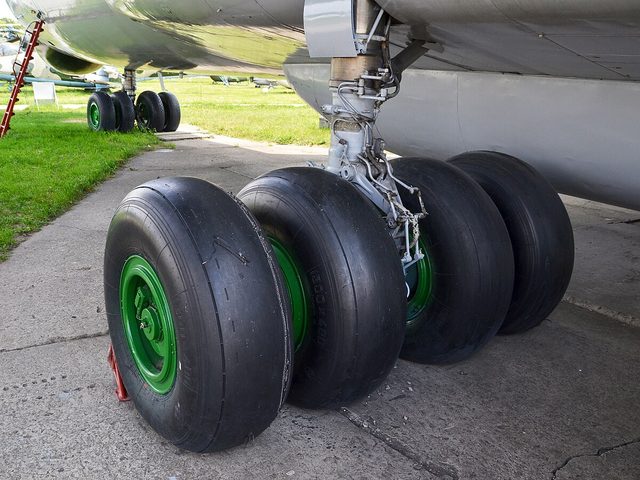
The Ilyushin Il-76 is a four-engine strategic airlifter that became the Soviet Union's answer to the Lockheed C-141 Starlifter, first flying in 1971 and entering service in 1974. Designed by the Ilyushin Design Bureau to operate from austere airfields across the vast Soviet territory, the Il-76 features a high-wing configuration, 12-wheel landing gear for unprepared surfaces, and a rear cargo ramp capable of handling outsized loads including armored vehicles and helicopters. Its distinctive glass nose houses a navigator station, a holdover from Soviet-era navigation practices that persists even in modernized variants. Powered by four Soloviev D-30KP turbofans, the Il-76 can carry up to 50 tons of cargo over 4,000 kilometers or operate at altitudes up to 43,000 feet, making it one of the most capable airlifters of its generation. The aircraft's rugged design allows operations in temperatures from -60°C to +45°C, and its onboard auxiliary power unit enables completely autonomous operations without ground support equipment. Military variants include the Il-76MD with uprated engines and the Il-76MDK used for cosmonaut zero-gravity training, while the A-50 Mainstay airborne early warning variant features a distinctive rotating radome. Though production paused in the 1990s, manufacturing resumed in Russia with the modernized Il-76MD-90A featuring PS-90 engines and a glass cockpit, eliminating the navigator position. The type remains in widespread service with air forces and cargo operators across the former Soviet Union, China, India, and numerous other nations. Its combination of payload capacity, rough-field performance, and operational simplicity has made it irreplaceable for military transport and humanitarian missions in remote regions. SkyMeter has tracked 21 flights across 11 airframes and 2 operators spanning routes, with Government of Russia the largest observed operator.
Safety in context
The incident rate counts flights with ANY safety event detected by SkyMeter: go-arounds (a routine response, not a failure), unstable-approach gate flags (advisory thresholds), rejected takeoffs (the system working as designed), and runway events. It is NOT an accident rate or fatality rate. For accident statistics, refer to the NTSB Aviation Accident Database (USA) or the Aviation Safety Network. See methodology for what each event type measures.
Performance
Speed envelope & approach
Dimensions
Airframe geometry
Weight & identification
Operating limits
Top operators
By fleet size · last 7 days

Safety profile
Flagged flights · last 7 days
Family
Related variants
No related variants.
Recent incidents
Flagged flights of IL76


Recent flights
Real flights of IL76 · airborne ≥ 20 min


