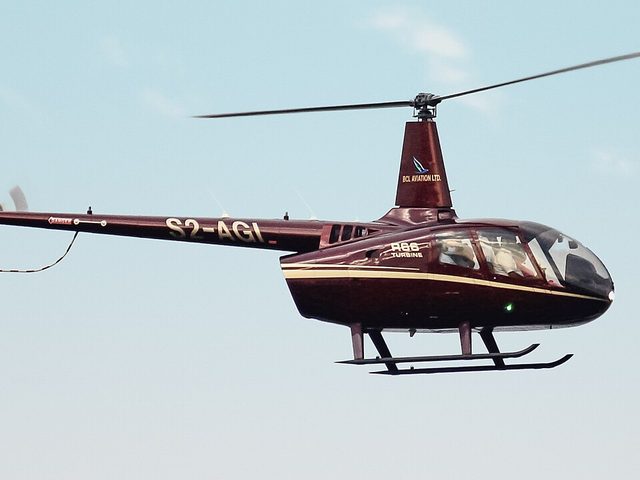
Robinson R66 Turbine
Single Turboshaft
The Robinson R66 is a five-seat light turbine helicopter introduced in 2010, marking Robinson Helicopter Company's first turbine-powered design after decades of building piston-engine aircraft. Powered by a single Rolls-Royce RR300 turboshaft engine producing 300 shaft horsepower, the R66 brought turbine reliability and performance to the light helicopter market at a price point significantly below traditional turbine competitors. Its design evolved directly from the piston-powered R44, sharing similar airframe geometry but incorporating a larger cabin, higher gross weight, and the smoother power delivery characteristic of turbine engines. The type quickly became popular for corporate transport, law enforcement observation, pipeline patrol, and flight training operations where operators wanted turbine simplicity without the acquisition cost of larger helicopters like the Bell 206 or Airbus H125. With a never-exceed speed of 140 knots, maximum gross weight of 2,700 pounds, and useful load around 1,100 pounds, the R66 occupies a sweet spot for missions requiring four to five occupants plus modest cargo over distances up to 300 nautical miles. Its Rolls-Royce engine requires inspections rather than overhauls at fixed intervals, and the airframe benefits from Robinson's reputation for straightforward maintenance and worldwide parts support. The R66 has proven especially popular in Australia, New Zealand, and North America for ranch work, aerial survey, and utility operations where its combination of turbine reliability, relatively low operating costs, and adequate performance make it more practical than piston helicopters in hot-and-high conditions. SkyMeter has tracked 536 flights across 255 airframes and 122 operators, with HIGGINS LEASING INC the largest observed operator.
Safety in context
The incident rate counts flights with ANY safety event detected by SkyMeter: go-arounds (a routine response, not a failure), unstable-approach gate flags (advisory thresholds), rejected takeoffs (the system working as designed), and runway events. It is NOT an accident rate or fatality rate. For accident statistics, refer to the NTSB Aviation Accident Database (USA) or the Aviation Safety Network. See methodology for what each event type measures.
Performance
Speed envelope & approach
Dimensions
Airframe geometry
Weight & identification
Operating limits
Top operators
By fleet size · last 7 days


Safety profile
Flagged flights · last 7 days
Family
Related variants
No related variants.
Recent flights
Real flights of R66 · airborne ≥ 20 min


