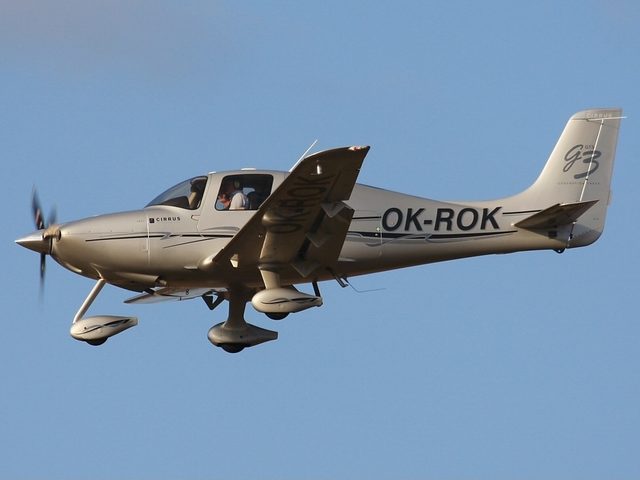
Cirrus Sr 22
Single Piston· 3,552 globally registered
The Cirrus SR22 is the best-selling single-engine piston aircraft of the 21st century and the first production general aviation airplane certified with an airframe parachute as standard equipment. Introduced in 2001 by Cirrus Aircraft of Duluth, Minnesota, the SR22 revolutionized personal aviation by combining composite construction, advanced avionics, and the Cirrus Airframe Parachute System (CAPS), a ballistic whole-aircraft recovery parachute that has saved over 100 lives in real-world deployments. Powered by a Continental IO-550-N producing 310 horsepower, the SR22 cruises at 183 knots and carries four adults plus baggage up to 1,200 nautical miles, making it a capable cross-country tourer for owner-pilots and small charter operators alike. The SR22's glass cockpit, initially featuring the Avidyne Entegra and later the Garmin Perspective avionics suite, set a new standard for situational awareness in light aircraft and influenced an entire generation of GA design. Its composite airframe keeps empty weight around 2,300 pounds despite a 3,600-pound max takeoff weight, and the low-wing configuration with fixed tricycle gear makes it approachable for pilots transitioning from trainers. The type has also served as the platform for Cirrus's Vision Jet development and remains in production today with continuous refinement across six generations, including turbocharged variants and the high-performance SR22T. SkyMeter has tracked 6,779 flights across 2,054 airframes and 1,681 operators, with CIRRUS DESIGN CORP the largest observed operator.
Safety in context
The incident rate counts flights with ANY safety event detected by SkyMeter: go-arounds (a routine response, not a failure), unstable-approach gate flags (advisory thresholds), rejected takeoffs (the system working as designed), and runway events. It is NOT an accident rate or fatality rate. The SR22 is widely used for primary flight training, so a substantial share of flagged events are stall-recognition practice and pattern-work go-arounds. That is normal training activity, not a safety-of-flight problem. For accident statistics, refer to the NTSB Aviation Accident Database (USA) or the Aviation Safety Network. See methodology for what each event type measures.
Performance
Speed envelope & approach
Dimensions
Airframe geometry
Weight & identification
Operating limits
Top operators
By fleet size · last 7 days


Safety profile
Flagged flights · last 7 days
Family
Related variants
Recent incidents
Flagged flights of SR22


Recent flights
Real flights of SR22 · airborne ≥ 20 min
No recent flights match these filters.