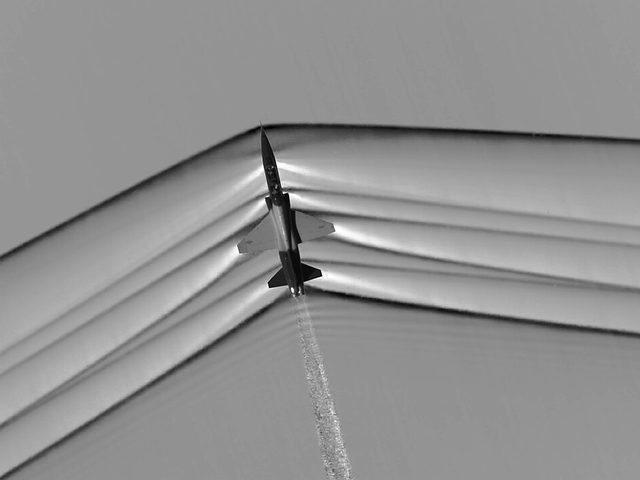
Northrop T-38 Talon
Twin Jet· 36 globally registered
The Northrop T-38 Talon holds the distinction of being the world's first supersonic trainer and remains the most-produced supersonic jet in aviation history, with over 1,100 built since its 1961 introduction. Designed as an advanced jet trainer for the United States Air Force, the T-38 was revolutionary in bringing supersonic performance to pilot training at a fraction of the cost of frontline fighters. Its twin General Electric J85 turbojets deliver a thrust-to-weight ratio that allows the aircraft to exceed Mach 1.3 and climb to 50,000 feet, giving student pilots genuine high-performance jet experience before transitioning to fighters, bombers, or tankers. The Talon's sleek, area-ruled fuselage and small wing made it exceptionally agile and economical to operate, qualities that have kept it in continuous USAF service for over six decades. Beyond its training role, the T-38 became NASA's aircraft of choice for astronaut proficiency flying and chase duties during Space Shuttle launches and landings, where its speed and maneuverability allowed pilots to closely monitor departing or returning orbiters. NASA's white-and-blue Talons became iconic symbols of the space program, flown by astronauts to maintain jet skills and travel between facilities. The aircraft's handling characteristics (light on the controls, honest in stalls, and forgiving of pilot errors) made it an ideal platform for teaching energy management and high-speed decision-making. Its safety record, while not without incidents over six decades of intensive training use, reflects a fundamentally sound design that has trained generations of military aviators across multiple allied air forces. The T-38 remains operational today in upgraded T-38C form, featuring glass cockpits, improved engines, and modern avionics, ensuring the type will likely serve into the 2030s. Its longevity is unmatched among supersonic aircraft; contemporaries like the F-104 and F-5 (its fighter derivative) have long since retired from most operators, yet the Talon continues to introduce new pilots to supersonic flight. The aircraft's approach speed of around 155 knots and landing configuration stall speed near 125 knots demand precision and energy awareness, teaching skills directly transferable to modern fighters. SkyMeter has tracked 1,192 flights across 222 airframes and 5 operators, with NATIONAL AERONAUTICS AND SPACE ADMINISTRATION the largest observed operator.
Recent in the news
All news →- Emergency landing Aug 15, 2026
Airborne-Flight Training 08.13.26: I-10 Deadstick, AMT SkillBridge, Dragon Flt - Aero-News.net
Safety in context
The incident rate counts flights with ANY safety event detected by SkyMeter: go-arounds (a routine response, not a failure), unstable-approach gate flags (advisory thresholds), rejected takeoffs (the system working as designed), and runway events. It is NOT an accident rate or fatality rate. For accident statistics, refer to the NTSB Aviation Accident Database (USA) or the Aviation Safety Network. See methodology for what each event type measures.
Performance
Speed envelope & approach
Dimensions
Airframe geometry
Weight & identification
Operating limits
Top operators
By fleet size · last 7 days


Safety profile
Flagged flights · last 7 days
Family
Related variants
No related variants.
Recent incidents
Flagged flights of T38


Recent flights
Real flights of T38 · airborne ≥ 20 min


