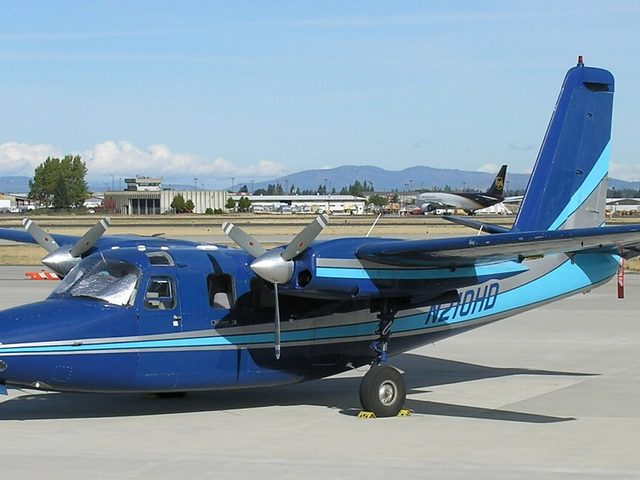
Aero Commander 680fp
Twin Piston· 38 globally registered
The Aero Commander 680 represents the pressurized evolution of one of general aviation's most successful twin-engine designs. Built by Aero Commander (later Rockwell) from the late 1950s through the 1980s, the 680 series brought cabin pressurization and greater performance to the proven Commander airframe, making it a favorite among corporate operators and air taxi services who needed reliable IFR capability and passenger comfort without stepping up to turbine power. With its distinctive high wing and twin Continental piston engines, the 680 could cruise at altitudes where weather and turbulence were less of a factor, a significant advantage over unpressurized twins of the era. The type earned a reputation for rugged construction and docile handling characteristics, though like most piston twins it demands respect during single-engine operations. Maximum takeoff weight of 6,750 pounds allowed useful loads sufficient for six passengers plus baggage on typical missions, while the pressurization system maintained a comfortable cabin altitude even when cruising in the mid-teens. Range exceeded 1,000 nautical miles with reserves, making it practical for cross-country business travel throughout North America. The 680's operating envelope includes a never-exceed speed of 230 knots and a maximum structural cruising speed of 190 knots, with approach speeds around 90 knots making it manageable at shorter runways. Today the Commander 680 remains in service primarily with small charter operators, corporate flight departments, and private owners who value its combination of cabin comfort, load-carrying ability, and relatively straightforward piston-twin operating economics. While production ended decades ago, the type's durable design and parts support from the aftermarket have kept many airframes flying. SkyMeter has tracked 24 flights across 3 airframes and 3 operators, with Corporate Airlink the largest observed operator.
Safety in context
The incident rate counts flights with ANY safety event detected by SkyMeter: go-arounds (a routine response, not a failure), unstable-approach gate flags (advisory thresholds), rejected takeoffs (the system working as designed), and runway events. It is NOT an accident rate or fatality rate. For accident statistics, refer to the NTSB Aviation Accident Database (USA) or the Aviation Safety Network. See methodology for what each event type measures.
Performance
Speed envelope & approach
Dimensions
Airframe geometry
Weight & identification
Operating limits
Top operators
By fleet size · last 7 days


Safety profile
Flagged flights · last 7 days
Family
Related variants
Recent incidents
Flagged flights of AC68

Recent flights
Real flights of AC68 · airborne ≥ 20 min
