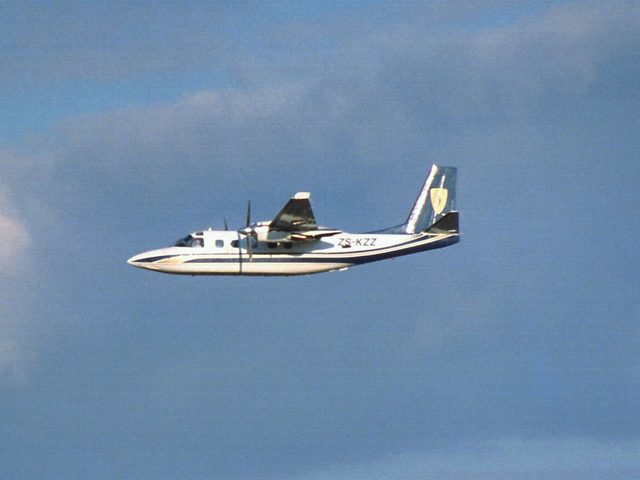
Gulfstream Aerospace-Rockwell Gulfstream 690 Commander 690
Twin Turboprop· 179 globally registered
The Aero Commander 500 series represents one of the most successful light twin-engine business aircraft of the 1950s and 1960s, establishing a reputation for rugged reliability that keeps many airframes flying today. Built by Aero Design and Engineering Company (later Rockwell) beginning in 1952, the Commander was among the first purpose-built corporate twins to challenge the dominance of converted military transports in the executive aviation market. Its high-wing configuration, twin Lycoming piston engines, and pressurized cabin variants made it a favorite for corporate shuttles, air ambulance work, and utility operations across challenging terrain. The type earned particular fame when President Dwight Eisenhower used an Aero Commander as his personal aircraft, cementing its status as a serious business tool. Over its production run through the 1980s, more than 2,000 Commanders were built across numerous variants including the 500, 560, 680, and 690 series, with later models featuring turboprop conversions. The aircraft's rugged construction and relatively forgiving handling characteristics made it popular for specialized roles including aerial survey, cargo hauling, and fire patrol work, missions where many examples continue to serve decades after manufacture. With a maximum takeoff weight of 7,000 pounds and a never-exceed speed of 230 knots, the Commander occupies a sweet spot between light twins like the Piper Aztec and larger cabin-class aircraft. Its stall speeds of 74 knots clean and 69 knots in landing configuration, combined with a maximum structural cruising speed of 195 knots, provide a comfortable operating envelope for pilots transitioning from single-engine aircraft. The type's enduring presence in utility aviation reflects both its original engineering quality and the economics of maintaining a proven piston twin in an era of increasingly expensive turbine alternatives. SkyMeter has tracked 133 flights across 49 airframes and 28 operators, with PONDEROSA AVIATION INC the largest observed operator.
Safety in context
The incident rate counts flights with ANY safety event detected by SkyMeter: go-arounds (a routine response, not a failure), unstable-approach gate flags (advisory thresholds), rejected takeoffs (the system working as designed), and runway events. It is NOT an accident rate or fatality rate. For accident statistics, refer to the NTSB Aviation Accident Database (USA) or the Aviation Safety Network. See methodology for what each event type measures.
Performance
Speed envelope & approach
Dimensions
Airframe geometry
Weight & identification
Operating limits
Top operators
By fleet size · last 7 days


Safety profile
Flagged flights · last 7 days
Family
Related variants
Recent incidents
Flagged flights of AC90


Recent flights
Real flights of AC90 · airborne ≥ 20 min


