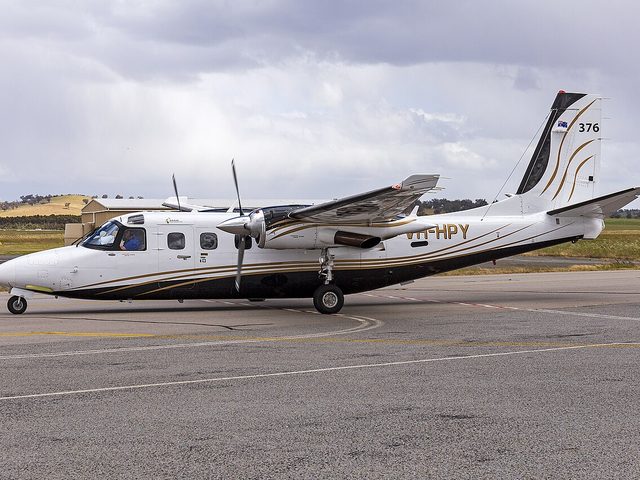
Gulfstream Aerospace-Rockwell Gulfstream Jetprop Commander 1000
Twin Turboprop
The Commander 114 and 115 represent a lineage of high-performance single-engine piston aircraft that trace their roots to the Rockwell Commander series of the 1970s. Originally designed by Rockwell International as the Model 112, the type evolved through several corporate transitions (passing through Gulfstream American and eventually to Commander Aircraft Company), each iteration refining the design for better speed and payload. The 114 and 115 variants, introduced in the 1990s, feature a distinctive low-wing configuration, retractable tricycle gear, and a spacious four-seat cabin that appeals to owner-pilots seeking cross-country capability without the complexity of a twin. Powered by a Lycoming IO-540 engine producing 260 horsepower, the Commander 115 cruises at approximately 160 knots true airspeed with a range exceeding 800 nautical miles. Its relatively high wing loading and clean aerodynamics deliver stable instrument flight characteristics and respectable cruise efficiency for the class, though the type never achieved the market penetration of Cessna or Piper competitors. The aircraft's rugged construction and generous useful load made it popular among serious private pilots and small charter operators who valued performance over brand ubiquity. Production ceased in the early 2000s after Commander Aircraft Company faced financial difficulties, leaving a modest fleet scattered across North America. The type remains a capable if somewhat rare choice in the high-performance single-engine market, prized by enthusiasts for its solid handling and cross-country credentials. SkyMeter has tracked 42 flights across 17 airframes and 13 operators, with KELLOGG CONSULTING LLC the largest observed operator.
Safety in context
The incident rate counts flights with ANY safety event detected by SkyMeter: go-arounds (a routine response, not a failure), unstable-approach gate flags (advisory thresholds), rejected takeoffs (the system working as designed), and runway events. It is NOT an accident rate or fatality rate. For accident statistics, refer to the NTSB Aviation Accident Database (USA) or the Aviation Safety Network. See methodology for what each event type measures.
Performance
Speed envelope & approach
Dimensions
Airframe geometry
Weight & identification
Operating limits
Top operators
By fleet size · last 7 days


Safety profile
Flagged flights · last 7 days
Family
Related variants
Recent incidents
Flagged flights of AC95


Recent flights
Real flights of AC95 · airborne ≥ 20 min


