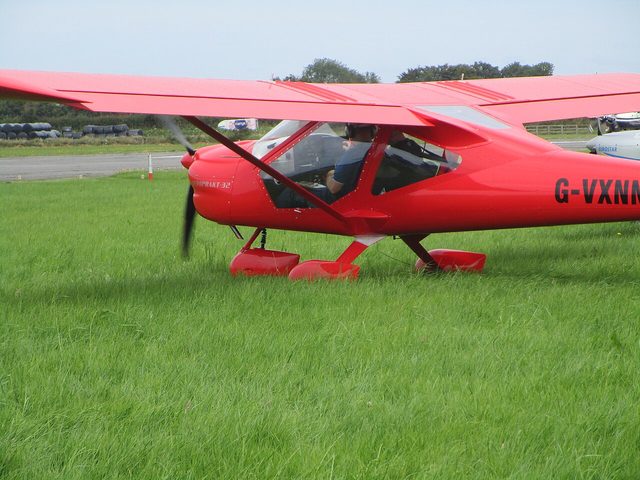
Aeroprakt A32 Vixxen
Single Piston
The Tecnam P2006T is an Italian light twin-engine aircraft that has carved out a distinctive niche as one of the most fuel-efficient piston twins in production. Built by Costruzioni Aeronautiche Tecnam in Capua, Italy, and introduced in 2007, the P2006T was designed from the outset to address the twin-engine training market's demand for lower operating costs. Its Rotax 912S3 engines burn automotive gasoline or avgas, consuming roughly half the fuel of traditional light twins like the Piper Seminole or Beechcraft Duchess, making it particularly attractive to flight schools training multi-engine commercial pilots on a budget. The aircraft's all-composite construction keeps empty weight around 1,650 pounds despite seating four, and its high-wing configuration with excellent visibility appeals to both training and personal transport roles. Maximum cruise speed reaches 145 knots at 8,000 feet, with a service ceiling of 16,500 feet and range exceeding 800 nautical miles with reserves. While not breaking speed records, the P2006T's operating economics (roughly $150-180 per flight hour versus $250-300 for legacy twins) have made it a commercial success in Europe and increasingly in North America, where it competes directly with Diamond's DA42 in the modern twin-trainer segment. Beyond flight training, the type has found roles in aerial survey, pipeline patrol, and personal transportation where twin-engine safety margins matter more than raw performance. Its docile handling characteristics, single-lever power controls, and Garmin glass cockpit standard fit have earned it a reputation as a forgiving trainer that transitions students smoothly from single-engine aircraft. SkyMeter has tracked 260 flights across 68 airframes and 21 operators, with MARSHALL WAYNE F the largest observed operator.
Safety in context
The incident rate counts flights with ANY safety event detected by SkyMeter: go-arounds (a routine response, not a failure), unstable-approach gate flags (advisory thresholds), rejected takeoffs (the system working as designed), and runway events. It is NOT an accident rate or fatality rate. For accident statistics, refer to the NTSB Aviation Accident Database (USA) or the Aviation Safety Network. See methodology for what each event type measures.
Performance
Speed envelope & approach
Dimensions
Airframe geometry
Weight & identification
Operating limits
Top operators
By fleet size · last 7 days


Safety profile
Flagged flights · last 7 days
Family
Related variants
No related variants.
Recent incidents
Flagged flights of AP32


Recent flights
Real flights of AP32 · airborne ≥ 20 min


