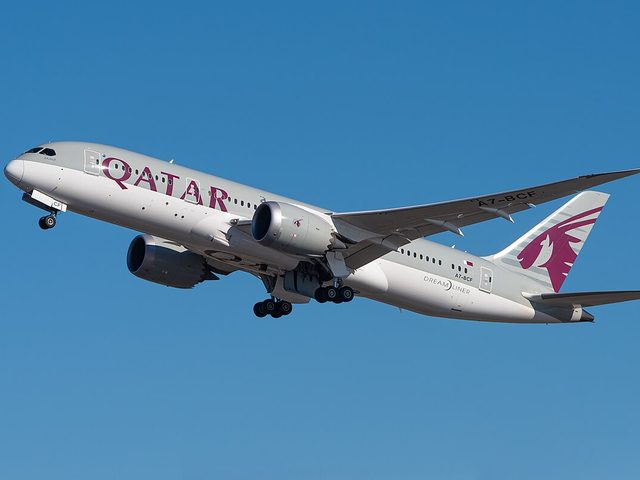
Boeing 787-10 Dreamliner
Twin Jet· 16 globally registered
The Boeing 787-10 Dreamliner is the stretched, highest-capacity member of Boeing's revolutionary composite widebody family, seating 330 passengers in typical two-class configuration and stretching 224 feet, 18 feet longer than the 787-9. Launched in 2013 and entering service with Singapore Airlines in 2018, the -10 was designed specifically for high-density medium-haul routes where its 6,430 nautical mile range proves sufficient but passenger volume demands more seats than the -9's 290. Unlike its siblings, the -10 cannot reach the most distant city pairs. It trades range for economics on thick regional trunk routes across Asia, Europe, and North America. What sets the entire 787 family apart is its composite construction: the fuselage and wings are roughly 50 percent carbon fiber reinforced plastic, a first for a commercial airliner of this size. This reduces weight, enables higher cabin pressure (6,000 feet equivalent versus the typical 8,000), larger windows, and improved fuel efficiency compared to aluminum contemporaries. The -10 shares the -9's wingspan but deletes the folding wingtip option, as it was designed for airports already accommodating 777s. Powered by either GE GEnx-1B or Rolls-Royce Trent 1000 engines, it cruises at Mach 0.85 and can reach a service ceiling of 43,000 feet. The 787-10 competes directly with the Airbus A350-900 on range-appropriate routes, offering airlines a lower trip cost when maximum range isn't required. Its operational envelope mirrors the -9: maximum operating speed of 330 knots IAS or Mach 0.90, approach speeds around 138 knots, and the same advanced fly-by-wire flight control system that gives all Dreamliners a common type rating. By mid-2024, Boeing had delivered over 170 of the type to carriers including United, Singapore Airlines, British Airways, and Etihad. SkyMeter has tracked 1,508 flights across 137 airframes and 3 operators, with UNITED AIRLINES INC the largest observed operator.
Safety in context
The incident rate counts flights with ANY safety event detected by SkyMeter: go-arounds (a routine response, not a failure), unstable-approach gate flags (advisory thresholds), rejected takeoffs (the system working as designed), and runway events. It is NOT an accident rate or fatality rate. For accident statistics, refer to the NTSB Aviation Accident Database (USA) or the Aviation Safety Network. See methodology for what each event type measures.
Performance
Speed envelope & approach
Dimensions
Airframe geometry
Weight & identification
Operating limits
Top operators
By fleet size · last 7 days


Safety profile
Flagged flights · last 7 days
Family
Related variants
Recent incidents
Flagged flights of B78X


Recent flights
Real flights of B78X · airborne ≥ 20 min


