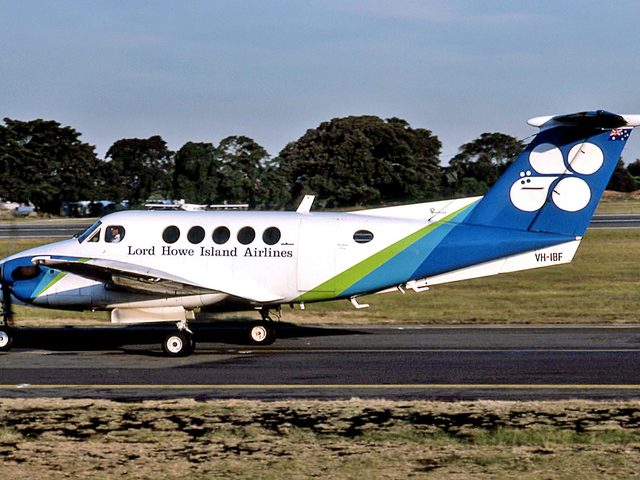
Beech 200 Super King
Twin Turboprop· 764 globally registered
The Beechcraft King Air 200 series stands as one of the most successful twin-turboprop aircraft ever built, with continuous production spanning five decades since its 1972 introduction. Powered by two Pratt & Whitney Canada PT6A turboprops, the King Air 200 carved out a unique niche between light twins and regional airliners, offering pressurized cabin comfort, 300-knot cruise speeds, and the ability to operate from short runways that jets cannot access. Its distinctive T-tail and straight wing made it instantly recognizable on ramps worldwide. The type became the workhorse of corporate aviation, air ambulance services, cargo feeders, and government agencies. Its reliability and relatively low operating costs made it ideal for missions requiring frequent stops, unpaved strips, or operations in remote areas where maintenance infrastructure is limited. The B200 variant, introduced in 1981 with more powerful PT6A-42 engines, became the definitive version and remains in production today as the King Air 250, making it one of the longest-running aircraft programs in history. The King Air's operating envelope includes a service ceiling of 35,000 feet, a range of roughly 1,700 nautical miles, and the ability to cruise at 310 knots true airspeed while carrying eight passengers in executive configuration. Its rugged landing gear and excellent short-field performance allow operations from 2,500-foot runways, a capability that keeps it relevant in an era of faster jets. Military variants serve with dozens of air forces worldwide, and the U.S. Army operates hundreds as the C-12 Huron for transport and reconnaissance missions. SkyMeter has tracked 5,484 flights across 991 airframes and 486 operators, with Can-West Corporate Air Charters Ltd the largest observed operator.
Safety in context
The incident rate counts flights with ANY safety event detected by SkyMeter: go-arounds (a routine response, not a failure), unstable-approach gate flags (advisory thresholds), rejected takeoffs (the system working as designed), and runway events. It is NOT an accident rate or fatality rate. For accident statistics, refer to the NTSB Aviation Accident Database (USA) or the Aviation Safety Network. See methodology for what each event type measures.
Performance
Speed envelope & approach
Dimensions
Airframe geometry
Weight & identification
Operating limits
Top operators
By fleet size · last 7 days


Safety profile
Flagged flights · last 7 days
Family
Related variants
Recent incidents
Flagged flights of BE20


Recent flights
Real flights of BE20 · airborne ≥ 20 min


