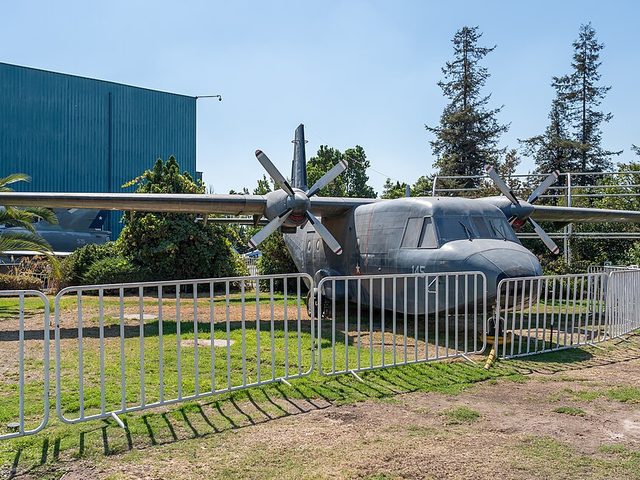
Casa Aviocar
Twin Turboprop· 36 globally registered
The CASA C-212 Aviocar is a rugged twin-turboprop utility transport designed by Spain's Construcciones Aeronáuticas SA in the late 1960s for short-haul cargo, passenger, and special-mission work. First flown in 1971, the type was built to operate from unprepared strips and austere environments, with a high wing, fixed tricycle gear, and a rear cargo ramp that made it ideal for humanitarian airlift, parachute operations, and remote resupply. Over 470 were built across multiple series (C-212-100 through -400), and the design was license-produced in Indonesia by IPTN. Though originally developed for the Spanish Air Force, the Aviocar found a substantial civilian niche with aid organizations, charter operators, and regional carriers needing a tough, go-anywhere airlifter. Powered by two Garrett TPE331 turboprops (750-925 shp depending on variant), the C-212 cruises around 150 knots and can carry up to 26 passengers or 5,700 pounds of cargo. Its short-field performance (takeoff in under 2,000 feet and landing in less than 1,500) makes it a favorite for bush operations and island-hopping routes where pavement is optional. Maximum operating speed is 180 knots IAS, with approach speeds around 90 knots and stall in landing configuration at 67 knots. The type's boxy fuselage and unpressurized cabin limit comfort on longer legs, but reliability and maintainability in harsh conditions have kept many airframes flying decades after manufacture. The Aviocar remains in service worldwide, from military patrol and maritime surveillance to civilian freight and humanitarian missions. Operators value its simplicity, load-carrying versatility, and ability to land on grass, gravel, or dirt without ground support equipment. SkyMeter has tracked 140 flights across 21 airframes and 14 operators, with SPITAKER LEASING LLC the largest observed operator.
Safety in context
The incident rate counts flights with ANY safety event detected by SkyMeter: go-arounds (a routine response, not a failure), unstable-approach gate flags (advisory thresholds), rejected takeoffs (the system working as designed), and runway events. It is NOT an accident rate or fatality rate. For accident statistics, refer to the NTSB Aviation Accident Database (USA) or the Aviation Safety Network. See methodology for what each event type measures.
Performance
Speed envelope & approach
Dimensions
Airframe geometry
Weight & identification
Operating limits
Top operators
By fleet size · last 7 days


Safety profile
Flagged flights · last 7 days
Recent incidents
Flagged flights of C212

Recent flights
Real flights of C212 · airborne ≥ 20 min


