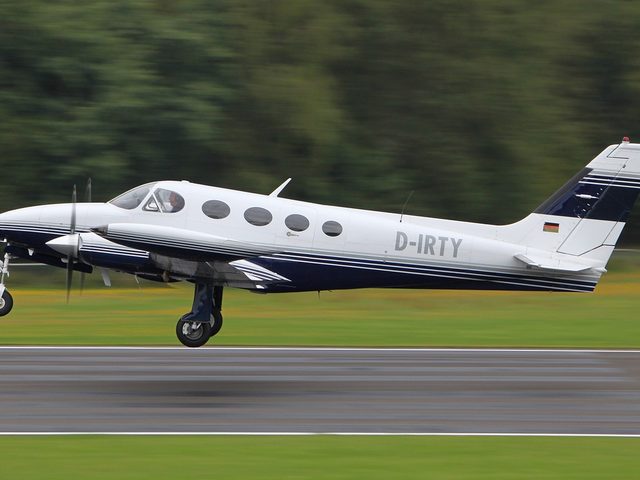
Cessna 340
Twin Piston· 718 globally registered
The Cessna 340 is a pressurized cabin-class twin introduced in 1972, filling the gap between Cessna's unpressurized 310 and the larger 400-series twins. With its 5.5 psi cabin differential and twin Continental TSIO-520 engines producing 310 horsepower each, the 340 brought turbine-like comfort to the piston twin market, allowing pilots to cruise above most weather at altitudes up to 29,800 feet. The improved 340A variant, introduced in 1976, added longer wings and increased fuel capacity, extending range to over 1,300 nautical miles and becoming the definitive version of the type. The 340 carved out a loyal following among owner-pilots and small charter operators who needed genuine all-weather capability without turboprop operating costs. Its pressurization system, relatively spacious six-seat cabin, and ability to maintain a sea-level cabin up to 20,000 feet made it a serious business tool for flying over the Rockies or across the country in instrument conditions. The aircraft's 190-knot cruise speed and 29,000-foot service ceiling put it in a performance class well above unpressurized twins, though it demanded respect for its higher approach speeds and more complex systems. Cessna built 1,351 Model 340s between 1972 and 1984, with the 340A accounting for the majority of production. The type remains popular in the used market, particularly among pilots stepping up from unpressurized twins or stepping down from turboprops. Its combination of cabin comfort, high-altitude capability, and relatively modest fuel burn continues to make economic sense for missions where pressurization matters but turbine acquisition costs don't pencil out. SkyMeter has tracked 421 flights across 181 airframes and 174 operators, with MATTS CATS LLC the largest observed operator.
Safety in context
The incident rate counts flights with ANY safety event detected by SkyMeter: go-arounds (a routine response, not a failure), unstable-approach gate flags (advisory thresholds), rejected takeoffs (the system working as designed), and runway events. It is NOT an accident rate or fatality rate. For accident statistics, refer to the NTSB Aviation Accident Database (USA) or the Aviation Safety Network. See methodology for what each event type measures.
Performance
Speed envelope & approach
Dimensions
Airframe geometry
Weight & identification
Operating limits
Top operators
By fleet size · last 7 days


Safety profile
Flagged flights · last 7 days
Family
Related variants
No related variants.
Recent incidents
Flagged flights of C340


Recent flights
Real flights of C340 · airborne ≥ 20 min


