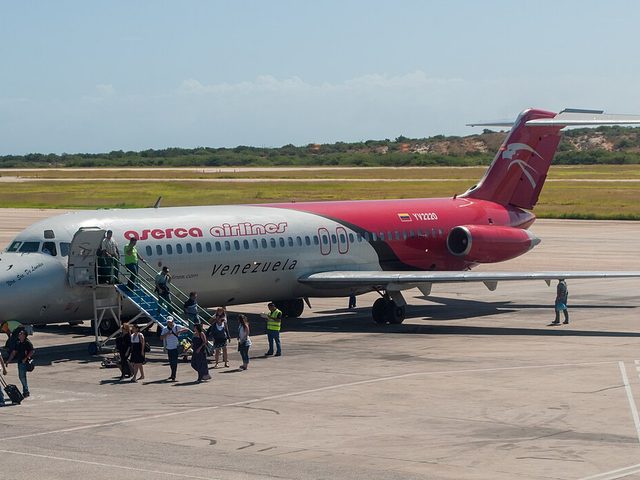
Douglas Dc 9-30
Twin Jet· 12 globally registered
The McDonnell Douglas DC-9-30 is the stretched variant of the iconic DC-9 family, introduced in 1967 to bridge the gap between the original Series 10 and the longer Series 40. With seating for up to 115 passengers in its original airline configuration, the -30 became the workhorse of short-haul jet operations throughout the 1970s and 1980s, combining the DC-9's signature rear-mounted Pratt & Whitney JT8D turbofans with improved range and payload capacity. The type's rugged construction and relatively simple systems made it a favorite for secondary markets and challenging operating environments. By the 21st century, most DC-9-30s have transitioned from passenger service to cargo operations, where their rugged airframe and reliable engines continue to prove valuable. The rear-mounted engine configuration keeps the fuselage low to the ground, simplifying freight loading, while the type's short-field performance allows access to airports that larger freighters cannot serve. Maximum takeoff weight of 121,000 pounds and a typical cruise speed of 450 knots at FL310 make it competitive for regional cargo routes, though modern noise regulations have pushed many operators to hushkit their JT8D engines or retire the fleet entirely. The DC-9-30's operating envelope reflects its 1960s design philosophy: a maximum operating speed of 410 knots IAS or Mach 0.84, with approach speeds around 128 knots depending on landing weight. Stall speeds of 98 knots in landing configuration and 115 knots clean require careful energy management on short runways, but the type's excellent low-speed handling characteristics made it popular with pilots. The DC-9 family eventually evolved into the MD-80 series and ultimately the Boeing 717, but the original -30 variant remains recognizable by its shorter fuselage and distinctive T-tail silhouette. SkyMeter has tracked 75 flights across 7 airframes and 2 operators over routes, with Aeronaves TSM the largest observed operator.
Safety in context
The incident rate counts flights with ANY safety event detected by SkyMeter: go-arounds (a routine response, not a failure), unstable-approach gate flags (advisory thresholds), rejected takeoffs (the system working as designed), and runway events. It is NOT an accident rate or fatality rate. For accident statistics, refer to the NTSB Aviation Accident Database (USA) or the Aviation Safety Network. See methodology for what each event type measures.
Performance
Speed envelope & approach
Dimensions
Airframe geometry
Weight & identification
Operating limits
Top operators
By fleet size · last 7 days

Safety profile
Flagged flights · last 7 days
Family
Related variants
Recent incidents
Flagged flights of DC93

Recent flights
Real flights of DC93 · airborne ≥ 20 min