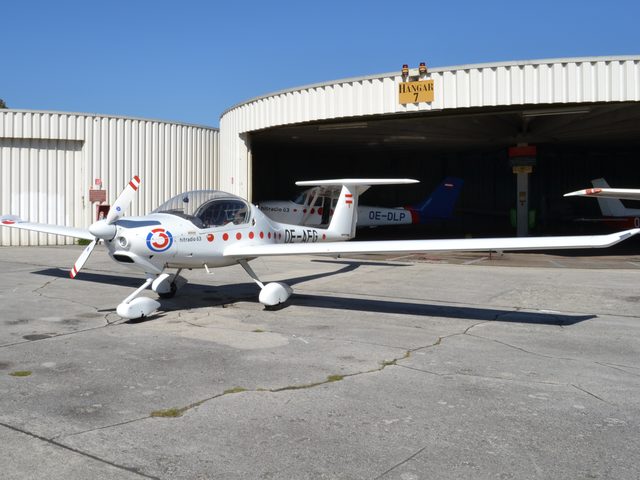
Diamond 20 Katana
Single Piston· 327 globally registered
The Diamond DA20 Katana is an Austrian two-seat trainer that revolutionized flight instruction when it entered service in 1993 as one of the first all-composite aircraft certified for ab-initio training. Built by Diamond Aircraft in Wiener Neustadt, the DA20 features a sleek glider-like design with a T-tail, bubble canopy, and exceptional visibility that makes it ideal for teaching stick-and-rudder skills. Its composite construction delivers a smooth, quiet ride and outstanding fuel efficiency: the Katana burns just 5 to 6 gallons per hour, roughly half what comparable metal trainers consume. Powered by a modest 125-horsepower Continental IO-240 engine in the most common C1 variant, the DA20 cruises at around 110 knots and climbs at 800 feet per minute, performance that's adequate for training missions while keeping operating costs low. The aircraft's benign stall characteristics, harmonized controls, and forgiving handling have made it a favorite at flight schools worldwide, where it competes directly with the Cessna 152 and Piper Tomahawk. The Katana's low wing loading and efficient wing design also give it respectable glide performance, a trait inherited from Diamond's motorglider heritage. More than 1,000 DA20s have been delivered globally, and the type remains in production today with updated avionics and powerplant options. Its combination of modern materials, low fuel burn, and excellent training ergonomics has secured its place as a standard primary trainer across North America, Europe, and Asia. SkyMeter has tracked 3,127 flights across 288 airframes and 88 operators, with SKYLINE AVIATION INC the largest observed operator.
Safety in context
The incident rate counts flights with ANY safety event detected by SkyMeter: go-arounds (a routine response, not a failure), unstable-approach gate flags (advisory thresholds), rejected takeoffs (the system working as designed), and runway events. It is NOT an accident rate or fatality rate. The DV20 is widely used for primary flight training, so a substantial share of flagged events are stall-recognition practice and pattern-work go-arounds. That is normal training activity, not a safety-of-flight problem. For accident statistics, refer to the NTSB Aviation Accident Database (USA) or the Aviation Safety Network. See methodology for what each event type measures.
Performance
Speed envelope & approach
Dimensions
Airframe geometry
Weight & identification
Operating limits
Top operators
By fleet size · last 7 days


Safety profile
Flagged flights · last 7 days
Family
Related variants
Recent incidents
Flagged flights of DV20


Recent flights
Real flights of DV20 · airborne ≥ 20 min


