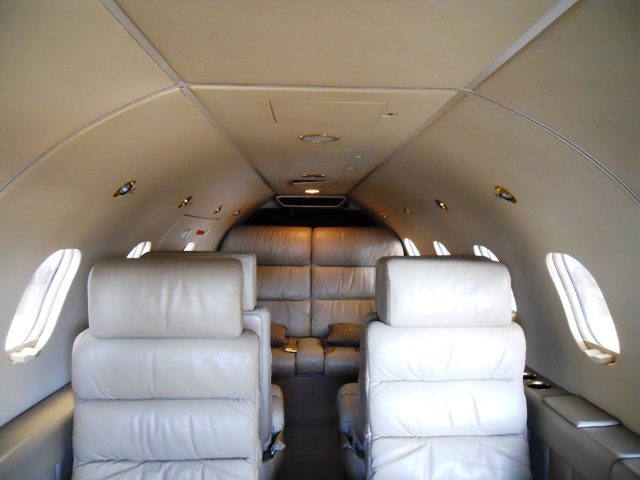
Learjet Bombardier Learjet 25
Twin Jet· 43 globally registered
The Learjet 25 is the aircraft that made "Learjet" synonymous with fast, glamorous business aviation. First flown in 1966, it was the stretched, more powerful evolution of Bill Lear's revolutionary Model 23, adding four feet of fuselage to seat eight passengers and mounting General Electric CJ610 turbojets that could push the sleek machine to 481 knots and 45,000 feet. With its needle nose, distinctive wingtip fuel tanks, and ability to climb like a fighter, the Lear 25 became the aspirational jet of the 1970s, flown by corporations, air ambulance operators, and rock stars alike. Over 730 were built before production ended in 1982, and the type earned a reputation for being both thrilling and demanding to fly, with approach speeds around 120 knots and a Mmo of 0.81 that pilots learned to respect. The Lear 25's performance envelope was extraordinary for its era: it could reach cruise altitude faster than most airliners and operate from runways as short as 4,500 feet, making it ideal for city-pair business travel. Its range of roughly 1,500 nautical miles with full fuel meant coast-to-coast trips required a fuel stop, but the speed advantage (cruising 100 knots faster than competing turboprops) made the trade-off worthwhile for time-sensitive executives. The aircraft's relatively light maximum takeoff weight of 15,000 pounds placed it in ICAO's Light wake turbulence category, yet it delivered jet performance that rivaled much larger aircraft. Today, the Lear 25 remains in service primarily with cargo operators, air ambulance providers, and specialty mission operators who value its speed and high-altitude capability. The type has found a second career in flight inspection, research, and training roles where its performance characteristics and relatively low operating costs compared to newer jets remain attractive. SkyMeter has tracked 9 flights across 4 airframes and 4 operators, with International Air Services the largest observed operator.
Safety in context
The incident rate counts flights with ANY safety event detected by SkyMeter: go-arounds (a routine response, not a failure), unstable-approach gate flags (advisory thresholds), rejected takeoffs (the system working as designed), and runway events. It is NOT an accident rate or fatality rate. For accident statistics, refer to the NTSB Aviation Accident Database (USA) or the Aviation Safety Network. See methodology for what each event type measures.
Performance
Speed envelope & approach
Dimensions
Airframe geometry
Weight & identification
Operating limits
Top operators
By fleet size · last 7 days


Safety profile
Flagged flights · last 7 days
Family
Related variants
Recent incidents
Flagged flights of LJ25

Recent flights
Real flights of LJ25 · airborne ≥ 20 min


