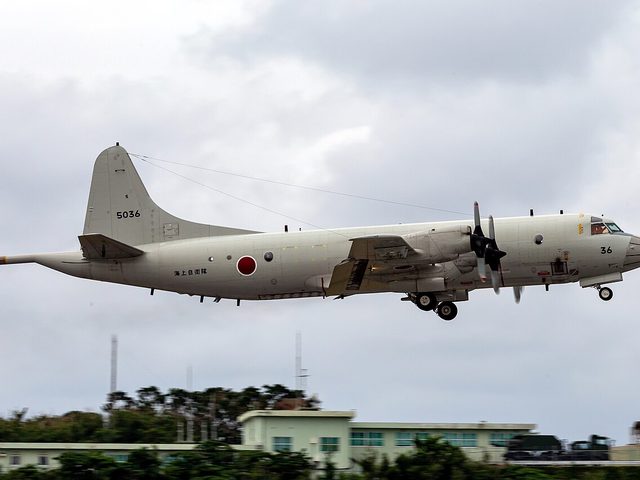
Lockheed P-3 Orion
Quad Turboprop· 100 globally registered
The Lockheed P-3 Orion is a four-engine turboprop maritime patrol aircraft derived from the civilian Electra airliner, entering U.S. Navy service in 1962 and becoming the West's dominant submarine hunter throughout the Cold War. Powered by four Allison T56 turboprops delivering exceptional low-altitude endurance, the P-3 can loiter for over ten hours at 1,500 feet, deploying sonobuoys and torpedoes to track submerged threats across vast ocean areas. More than 750 were built, serving with navies worldwide from Japan to Germany to Australia, and the type remains operational six decades later in anti-submarine warfare, maritime surveillance, and counter-narcotics missions. Beyond military service, the P-3's rugged airframe and long-range capability made it ideal for scientific research. NOAA operates the WP-3D Orion variant (popularly known as "Hurricane Hunters") flying directly into tropical cyclones to gather meteorological data that no satellite can replicate. These aircraft penetrate eyewalls at altitudes as low as 1,500 feet, deploying dropsondes to measure temperature, pressure, and wind speed in conditions that would ground any other crewed platform. The P-3's ability to carry heavy sensor payloads, maintain station for hours, and operate from austere coastal airfields has made it irreplaceable for atmospheric science, fisheries enforcement, and environmental monitoring from the Arctic to the Antarctic. The Orion's operational envelope reflects its maritime patrol pedigree: a maximum speed of 411 knots, service ceiling of 28,300 feet, and unrefueled range exceeding 2,380 nautical miles. Its low-speed handling remains benign, with approach speeds around 115 knots and a stall in landing configuration near 90 knots, critical for visual search patterns over open water. While the U.S. Navy has begun replacing the P-3 with the jet-powered P-8 Poseidon, hundreds of Orions continue flying globally, testament to a design that balanced endurance, payload, and reliability better than any successor has yet matched. SkyMeter has tracked 3 flights across 2 airframes and 2 operators, with UNITED STATES DEPARTMENT OF COMMERCE the largest observed operator.
Safety in context
The incident rate counts flights with ANY safety event detected by SkyMeter: go-arounds (a routine response, not a failure), unstable-approach gate flags (advisory thresholds), rejected takeoffs (the system working as designed), and runway events. It is NOT an accident rate or fatality rate. For accident statistics, refer to the NTSB Aviation Accident Database (USA) or the Aviation Safety Network. See methodology for what each event type measures.
Performance
Speed envelope & approach
Dimensions
Airframe geometry
Weight & identification
Operating limits
Top operators
By fleet size · last 7 days

Safety profile
Flagged flights · last 7 days
Family
Related variants
Recent incidents
Flagged flights of P3


Recent flights
Real flights of P3 · airborne ≥ 20 min

