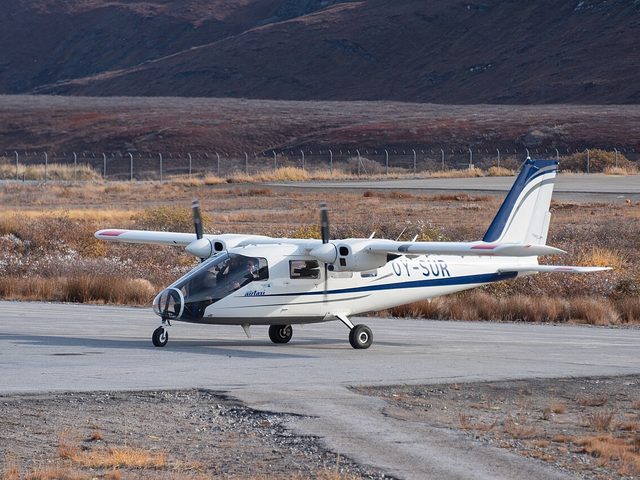
Vulcan- Partevania Vulcan Air P68
Twin Piston· 3 globally registered
The Partenavia P68 is an Italian twin-engine light aircraft that carved out a distinctive niche as a high-wing observation and utility platform from the early 1970s onward. Built by Partenavia (later Vulcanair after the company's 1998 acquisition), the P68 was designed with excellent visibility in mind: its high wing and large greenhouse canopy made it ideal for aerial survey, patrol, and multi-engine training roles that demanded unobstructed sightlines. The type's rugged fixed tricycle gear and docile handling characteristics allowed it to operate from shorter strips and rougher surfaces than many of its low-wing twin competitors, while its twin Lycoming piston engines provided redundancy without the complexity of retractable gear. Though never produced in large numbers compared to Cessna or Piper twins, the P68 found steady work in specialized markets: police and border patrol agencies valued its loiter capability and observer-friendly cabin, while flight schools appreciated its benign stall behavior and relatively economical operating costs for multi-engine instruction. The aircraft's 152-knot max structural cruising speed and 174-knot never-exceed limit place it firmly in the utility rather than speed category, but its 1,000-nautical-mile range and ability to carry six occupants made it versatile enough for light charter and air ambulance work. Various subtypes emerged over the decades, including turbocharged variants and the stretched P68C, which remains in limited production today under the Vulcanair brand. SkyMeter has tracked 194 flights across 56 airframes and 23 operators, with SIX KILO WHISKEY LLC the largest observed operator.
Safety in context
The incident rate counts flights with ANY safety event detected by SkyMeter: go-arounds (a routine response, not a failure), unstable-approach gate flags (advisory thresholds), rejected takeoffs (the system working as designed), and runway events. It is NOT an accident rate or fatality rate. For accident statistics, refer to the NTSB Aviation Accident Database (USA) or the Aviation Safety Network. See methodology for what each event type measures.
Performance
Speed envelope & approach
Dimensions
Airframe geometry
Weight & identification
Operating limits
Top operators
By fleet size · last 7 days


Safety profile
Flagged flights · last 7 days
Family
Related variants
Recent incidents
Flagged flights of P68


Recent flights
Real flights of P68 · airborne ≥ 20 min


