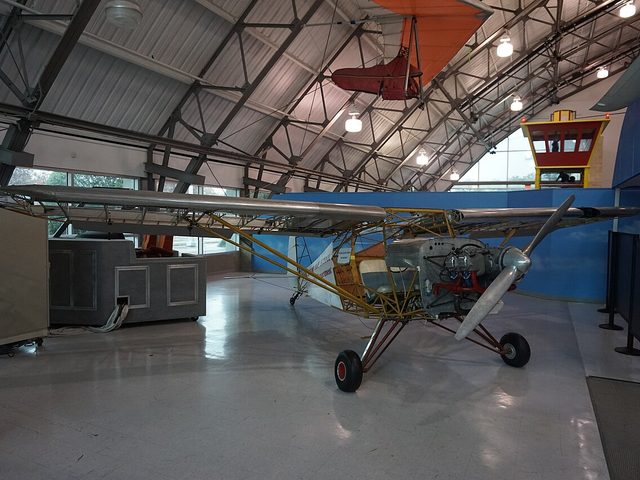
Piper Pa-20 Pacer
Single Piston· 330 globally registered
The Piper PA-20 Pacer is a tailwheel conversion of the earlier PA-16 Clipper, introduced in 1950 as Piper's answer to pilots who wanted more power and better short-field performance than the tricycle-gear models offered. With its conventional landing gear and 125 to 135 horsepower Lycoming engine, the Pacer became a favorite among bush pilots and backcountry flyers who valued its rugged simplicity and forgiving handling characteristics. The design featured fabric-covered steel tube fuselage construction and wooden wing spars, typical of Piper's postwar light aircraft philosophy of keeping things straightforward and maintainable in the field. Production ran until 1954, with approximately 1,120 Pacers built before Piper shifted focus to the more modern all-metal designs that would define the company's future. The Pacer's relatively low stall speed of 43 knots in landing configuration and never-exceed speed of 135 knots gave it a comfortable operating envelope for recreational flying and utility work on grass strips and unimproved surfaces. Many examples were later modified with larger engines or STOL kits, and the type remains popular in the vintage aircraft community for its classic lines and honest flying qualities. Today the PA-20 occupies a niche as an affordable entry into tailwheel flying, offering pilots a chance to build skills in a forgiving airframe with enough performance for cross-country travel. Its two-seat tandem configuration and relatively light wing loading make it well-suited to training and personal flying, though it lacks the cabin space and load-carrying ability of later four-seat designs. SkyMeter has tracked 42 flights across 16 airframes and 16 operators, with BURBANK KEVIN L, BURBANK PAMELA M the largest observed operator.
Safety in context
The incident rate counts flights with ANY safety event detected by SkyMeter: go-arounds (a routine response, not a failure), unstable-approach gate flags (advisory thresholds), rejected takeoffs (the system working as designed), and runway events. It is NOT an accident rate or fatality rate. For accident statistics, refer to the NTSB Aviation Accident Database (USA) or the Aviation Safety Network. See methodology for what each event type measures.
Performance
Speed envelope & approach
Dimensions
Airframe geometry
Weight & identification
Operating limits
Top operators
By fleet size · last 7 days


Safety profile
Flagged flights · last 7 days
Recent incidents
Flagged flights of PA20

Recent flights
Real flights of PA20 · airborne ≥ 20 min