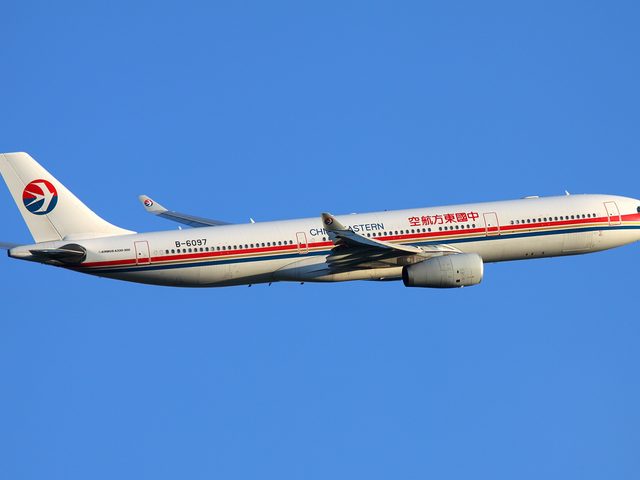
Airbus A330-300
Twin Jet· 43 globally registered
The Airbus A330-300 is the stretched, long-range variant of the A330 family, introduced in 1993 as one of the first widebody twinjets designed to replace aging trijets on intercontinental routes. With seating for 250 to 290 passengers in typical three-class layouts and a range exceeding 6,350 nautical miles, the A333 became a workhorse for airlines seeking fuel efficiency without sacrificing passenger capacity. Its commonality with the A340 quadjet (sharing the same wing, cockpit, and systems) allowed Airbus to offer operators fleet flexibility and reduced training costs, while advances in ETOPS certification enabled twin-engine operations over remote oceanic routes previously reserved for three- and four-engine aircraft. The type proved especially popular in Asia-Pacific markets, where carriers like Cathay Pacific, Korean Air, and Malaysia Airlines deployed it on dense regional trunk routes and long-haul services to Europe and North America. Powered by either Rolls-Royce Trent 700, Pratt & Whitney PW4000, or General Electric CF6-80E1 engines, the A333 offered airlines engine choice, a rarity among widebodies, and delivered operating costs roughly 15 percent lower than the Boeing 767-300ER on comparable missions. Though production ended in 2017 as the A330neo family took over, the classic A330-300 remains in widespread service, valued for its reliability, spacious cabin cross-section, and proven economics on medium- to long-haul international routes. SkyMeter has tracked 5,841 flights across 579 airframes and 10 operators spanning routes, with DELTA AIR LINES INC the largest observed operator.
Safety in context
The incident rate counts flights with ANY safety event detected by SkyMeter: go-arounds (a routine response, not a failure), unstable-approach gate flags (advisory thresholds), rejected takeoffs (the system working as designed), and runway events. It is NOT an accident rate or fatality rate. For accident statistics, refer to the NTSB Aviation Accident Database (USA) or the Aviation Safety Network. See methodology for what each event type measures.
Performance
Speed envelope & approach
Dimensions
Airframe geometry
Weight & identification
Operating limits
Top operators
By fleet size · last 7 days


Safety profile
Flagged flights · last 7 days
Recent incidents
Flagged flights of A333


Recent flights
Real flights of A333 · airborne ≥ 20 min


