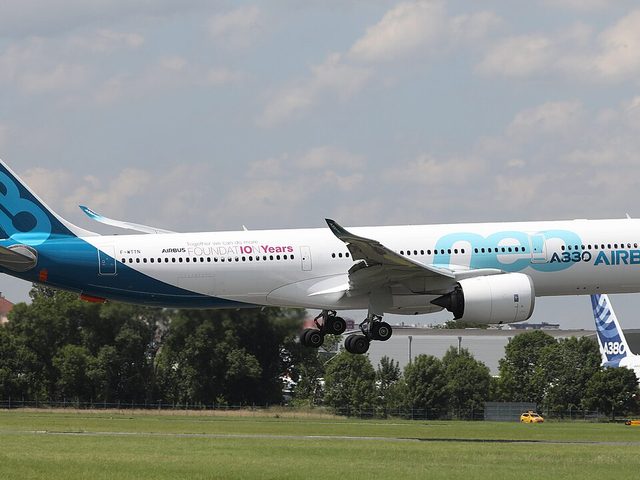
Airbus A330-900
Twin Jet· 11 globally registered
The Airbus A330-900neo represents the latest evolution of the A330 family, combining proven widebody twin-jet architecture with new-generation Rolls-Royce Trent 7000 engines and aerodynamic refinements borrowed from the A350. Launched in 2014 and entering service with TAP Air Portugal in 2018, the -900neo delivers 14% lower fuel burn per seat than the original A330-300 while extending range to 7,200 nautical miles, enough to connect most city pairs worldwide outside ultra-long-haul routes like New York to Singapore. The neo (new engine option) designation reflects not just the Trent 7000 powerplants but also a suite of drag-reduction features: larger, A350-inspired winglets that add 12 feet of span, optimized wing twist, and lighter composite materials throughout the airframe. Maximum takeoff weight climbed to 545,000 pounds, enabling operators to carry full passenger loads on routes the classic A330 could only serve with payload restrictions. The type competes directly with Boeing's 787-9 in the 260–300 seat segment, offering airlines lower acquisition costs and commonality with existing A330 fleets at the expense of the 787's composite fuselage and slightly better fuel efficiency. Delta Air Lines became the largest A330-900neo operator, deploying the type on premium transatlantic routes where its spacious cabin cross-section (18 inches wider than the 787) supports lie-flat business class and high-density economy configurations. The -900neo retains the A330's reputation for dispatch reliability while meeting modern noise and emissions standards, making it a pragmatic choice for carriers seeking widebody economics without the capital outlay of next-generation composite twins. SkyMeter has tracked 2,240 flights across 172 airframes and 7 operators, with DELTA AIR LINES INC the largest observed operator.
Recent in the news
All news →- Emergency landing Aug 16, 2026
An Airbus A330 to Manchester was forced to divert to Siberia
Safety in context
The incident rate counts flights with ANY safety event detected by SkyMeter: go-arounds (a routine response, not a failure), unstable-approach gate flags (advisory thresholds), rejected takeoffs (the system working as designed), and runway events. It is NOT an accident rate or fatality rate. For accident statistics, refer to the NTSB Aviation Accident Database (USA) or the Aviation Safety Network. See methodology for what each event type measures.
Performance
Speed envelope & approach
Dimensions
Airframe geometry
Weight & identification
Operating limits
Top operators
By fleet size · last 7 days


Safety profile
Flagged flights · last 7 days
Recent incidents
Flagged flights of A339


Recent flights
Real flights of A339 · airborne ≥ 20 min
No recent flights match these filters.