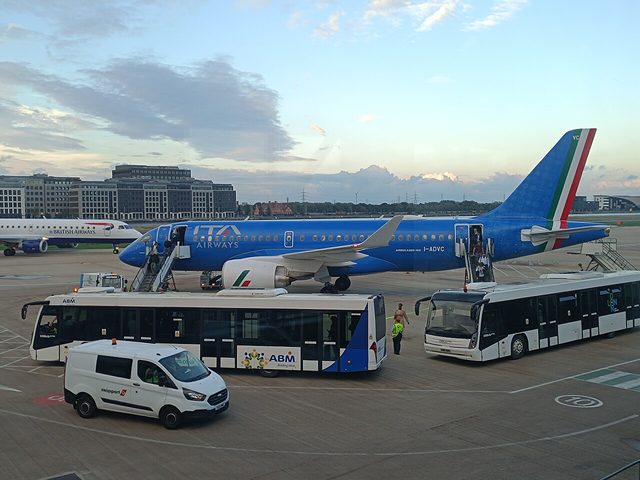
Airbus-Bombardier Airbus A220-100
Twin Jet· 45 globally registered
The Airbus A220-100 began life as the Bombardier CSeries CS100, a clean-sheet design launched in 2008 to challenge the bottom of the narrowbody market with unprecedented fuel efficiency. When Bombardier's financial struggles threatened the program, Airbus acquired a controlling stake in 2018 and rebranded the aircraft as the A220, giving it global scale and the marketing muscle to compete head-on with the Boeing 737 MAX 7 and Airbus A319neo. The CS100 first flew in 2013 and entered service with Swiss International Air Lines in 2016, becoming the first commercial airliner with a composite wing and Pratt & Whitney PurePower geared turbofan engines as standard. Its advanced aerodynamics and engine technology deliver roughly 20 percent better fuel burn per seat than previous-generation competitors, making it the most efficient aircraft in the 100-135 seat class. The type's wide cabin cross-section, inherited from Bombardier's focus on passenger comfort, offers five-abreast seating with a 2-3 layout that feels more spacious than the six-abreast squeeze of larger narrowbodies. Maximum range of 3,400 nautical miles allows nonstop transcontinental U.S. routes and transatlantic hops from the East Coast, while the aircraft's short-field performance opens up airports that larger jets cannot serve economically. Delta Air Lines became the launch customer in the United States in 2018, eventually ordering 95 A220s to replace aging MD-88 and MD-90 fleets, and the type has since found favor with carriers seeking right-sized capacity on thin routes without sacrificing range or economics. SkyMeter has tracked 2,194 flights across 79 airframes and 7 operators, with BANK OF UTAH TRUSTEE the largest observed operator.
Safety in context
The incident rate counts flights with ANY safety event detected by SkyMeter: go-arounds (a routine response, not a failure), unstable-approach gate flags (advisory thresholds), rejected takeoffs (the system working as designed), and runway events. It is NOT an accident rate or fatality rate. For accident statistics, refer to the NTSB Aviation Accident Database (USA) or the Aviation Safety Network. See methodology for what each event type measures.
Performance
Speed envelope & approach
Dimensions
Airframe geometry
Weight & identification
Operating limits
Top operators
By fleet size · last 7 days


Safety profile
Flagged flights · last 7 days
Family
Related variants
Recent incidents
Flagged flights of BCS1


Recent flights
Real flights of BCS1 · airborne ≥ 20 min
