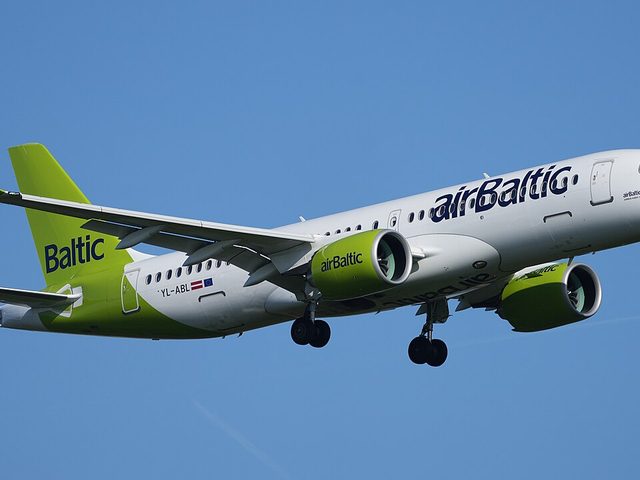
Airbus-Bombardier Airbus A220-300
Twin Jet· 42 globally registered
The Airbus A220-300 represents one of the most significant clean-sheet narrowbody designs of the 21st century, originally conceived by Bombardier as the CSeries CS300 before Airbus acquired the program in 2018. Purpose-built for the 120-160 seat market segment that had been neglected for decades, the A220 introduced an all-new fuselage cross-section wider than the Boeing 737 or Airbus A320 despite its smaller capacity, along with Pratt & Whitney PW1500G geared turbofan engines that deliver roughly 20 percent better fuel efficiency than previous-generation aircraft. The type's advanced composite wing and fly-by-wire flight controls give it exceptional field performance, allowing operations from shorter runways and steep approaches that larger narrowbodies cannot handle. Its maximum operating speed of Mach 0.82 and service ceiling of 41,000 feet match those of much larger jets, while approach speeds around 125 knots and a maximum takeoff weight of 153,000 pounds position it perfectly between regional jets and mainline narrowbodies. The A220-300 has proven especially popular with carriers seeking to replace aging 757s and early-generation 737s on thin transcontinental and transatlantic routes, where its 3,400 nautical mile range and superior economics open new point-to-point markets that were previously unviable. The aircraft's spacious cabin, with wider seats and larger windows than competing types, has made it a passenger favorite on routes from Montreal to London and New York to Charleston. SkyMeter has tracked 9,131 flights across 371 airframes and 20 operators, with DELTA AIR LINES INC the largest observed operator.
Safety in context
The incident rate counts flights with ANY safety event detected by SkyMeter: go-arounds (a routine response, not a failure), unstable-approach gate flags (advisory thresholds), rejected takeoffs (the system working as designed), and runway events. It is NOT an accident rate or fatality rate. For accident statistics, refer to the NTSB Aviation Accident Database (USA) or the Aviation Safety Network. See methodology for what each event type measures.
Performance
Speed envelope & approach
Dimensions
Airframe geometry
Weight & identification
Operating limits
Top operators
By fleet size · last 7 days


Safety profile
Flagged flights · last 7 days
Family
Related variants
Recent incidents
Flagged flights of BCS3


Recent flights
Real flights of BCS3 · airborne ≥ 20 min
