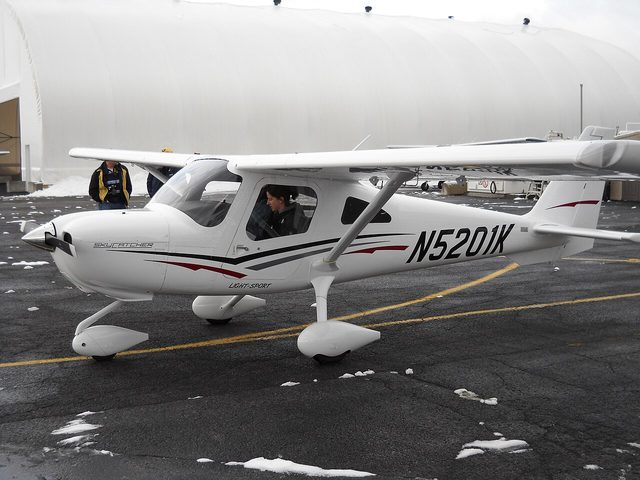
Cessna 162 Skycatcher
Single Piston· 180 globally registered
The Cessna 162 Skycatcher was Cessna's entry into the Light Sport Aircraft market, designed specifically to meet the FAA's LSA weight and performance limits introduced in 2004. First flown in 2008 and certified in 2009, the Skycatcher was built in China by Shenyang Aircraft Corporation to keep costs competitive, marking Cessna's first major offshore manufacturing venture. With a maximum takeoff weight of exactly 1,320 pounds and a 100-horsepower Continental O-200-D engine, it sits at the regulatory ceiling for the LSA category, offering flight schools a modern alternative to aging Cessna 150s and 152s. The Skycatcher featured a high-wing configuration with a 30-foot span, side-by-side seating, and a large canopy for excellent visibility. Its all-metal construction and tricycle landing gear made it familiar to pilots transitioning from traditional trainers, while modern touches like a Garmin avionics suite and electric flaps brought contemporary technology to the entry-level market. The aircraft cruises around 118 knots and has a range of approximately 470 nautical miles, adequate for local training and short cross-country flights. Production challenges, quality control issues with the Chinese manufacturing, and price increases that pushed the Skycatcher above $150,000 ultimately limited its commercial success. Cessna halted production in 2013 after building fewer than 275 aircraft, far short of initial projections. Despite its brief production run, the type remains active in the flight training fleet, particularly among schools seeking LSA-compliant trainers that can be flown by sport pilot certificate holders. SkyMeter has tracked 292 flights across 55 airframes and 40 operators, with RAINIER FLIGHT SERVICE LLC the largest observed operator.
Safety in context
The incident rate counts flights with ANY safety event detected by SkyMeter: go-arounds (a routine response, not a failure), unstable-approach gate flags (advisory thresholds), rejected takeoffs (the system working as designed), and runway events. It is NOT an accident rate or fatality rate. The C162 is widely used for primary flight training, so a substantial share of flagged events are stall-recognition practice and pattern-work go-arounds. That is normal training activity, not a safety-of-flight problem. For accident statistics, refer to the NTSB Aviation Accident Database (USA) or the Aviation Safety Network. See methodology for what each event type measures.
Performance
Speed envelope & approach
Dimensions
Airframe geometry
Weight & identification
Operating limits
Top operators
By fleet size · last 7 days


Safety profile
Flagged flights · last 7 days
Recent incidents
Flagged flights of C162

Recent flights
Real flights of C162 · airborne ≥ 20 min
