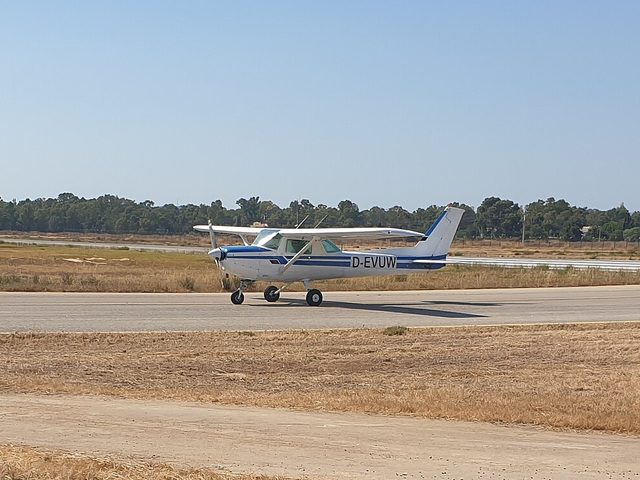
Cessna 152
Single Piston· 1,742 globally registered
The Cessna 152 is the world's most ubiquitous two-seat trainer, a refined successor to the already-legendary Cessna 150 that dominated flight schools from its 1977 introduction through 1985. Cessna built 7,584 examples in those eight years, and the type remains the backbone of primary flight training across North America, Europe, and Oceania decades later. Its 110-horsepower Lycoming O-235 engine, tricycle landing gear, and docile handling make it nearly ideal for ab-initio students, while its modest operating costs keep it economically viable for flight schools even as fuel prices climb. The 152's design is deliberately forgiving: full-span flaps, a wide center of gravity envelope, and benign stall characteristics that tolerate ham-fisted student inputs without drama. Maximum structural cruising speed sits at 111 knots, never-exceed at 149 knots, and stall speed in landing configuration is a gentle 35 knots, slow enough that most instructors can demonstrate a power-off approach over the fence at walking pace. The type's longevity is a testament to Cessna's engineering pragmatism: the airframe is simple enough that a rural A&P can maintain it with hand tools, parts remain widely available, and the aircraft's reputation for surviving hard landings has made it a durable asset for training operations that cycle through hundreds of students per year. SkyMeter has tracked 6,393 flights across 777 airframes and 384 operators, with HILLSBORO AERO ACADEMY LLC the largest observed operator.
Safety in context
The incident rate counts flights with ANY safety event detected by SkyMeter: go-arounds (a routine response, not a failure), unstable-approach gate flags (advisory thresholds), rejected takeoffs (the system working as designed), and runway events. It is NOT an accident rate or fatality rate. The C152 is widely used for primary flight training, so a substantial share of flagged events are stall-recognition practice and pattern-work go-arounds. That is normal training activity, not a safety-of-flight problem. For accident statistics, refer to the NTSB Aviation Accident Database (USA) or the Aviation Safety Network. See methodology for what each event type measures.
Performance
Speed envelope & approach
Dimensions
Airframe geometry
Weight & identification
Operating limits
Top operators
By fleet size · last 7 days


Safety profile
Flagged flights · last 7 days
Recent incidents
Flagged flights of C152


Recent flights
Real flights of C152 · airborne ≥ 20 min
No recent flights match these filters.