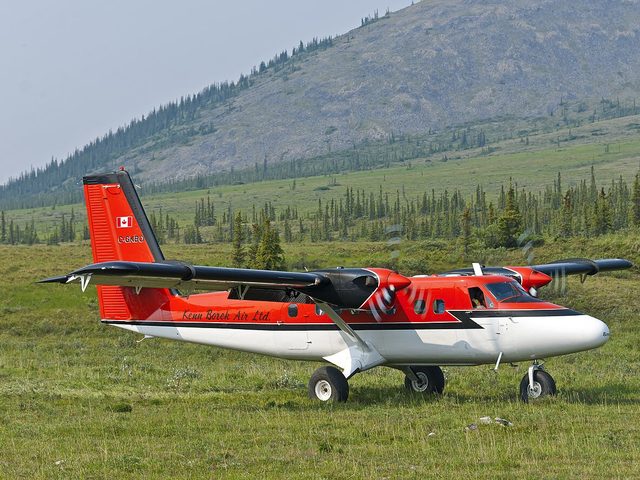
Dehavilland Canada Twin Otter
Twin Turboprop· 131 globally registered
The De Havilland Canada DHC-6 Twin Otter stands as one of aviation's most versatile and enduring STOL workhorses, purpose-built for short unprepared strips, floats, skis, and tundra tires. First flown in 1965, the Twin Otter was designed around the demanding bush and commuter operations of Canada's north, where 19-seat capacity, twin-engine reliability, and the ability to operate from 1,000-foot gravel bars or water were non-negotiable. Its high wing, fixed landing gear, and twin Pratt & Whitney PT6A turboprops deliver exceptional low-speed handling and a stall speed under 50 knots with flaps, making it the aircraft of choice for remote lodges, island-hopping seaplane services, skydiving operations, and humanitarian missions in roadless regions. Production ran until 1988 with over 800 built, then resumed in 2010 under Viking Air as the Series 400 with a glass cockpit and refined systems, proving the design's timeless utility. The Twin Otter holds the distinction of operating scheduled service to some of the world's shortest runways, including Saba's 1,300-foot cliff-edge strip in the Caribbean, and remains the backbone of floatplane airlines like Harbour Air, which operates the largest commercial seaplane fleet in North America. Its 900-nautical-mile range and 25,000-foot service ceiling are modest by airliner standards, but its ability to land on a frozen lake, offload cargo, and depart in under 1,000 feet is unmatched in the 19-seat class. SkyMeter has tracked 1,663 flights across 164 airframes and 40 operators spanning routes, with DESERT SAND AIRCRAFT LEASING CO INC the largest observed operator.
Safety in context
The incident rate counts flights with ANY safety event detected by SkyMeter: go-arounds (a routine response, not a failure), unstable-approach gate flags (advisory thresholds), rejected takeoffs (the system working as designed), and runway events. It is NOT an accident rate or fatality rate. For accident statistics, refer to the NTSB Aviation Accident Database (USA) or the Aviation Safety Network. See methodology for what each event type measures.
Performance
Speed envelope & approach
Dimensions
Airframe geometry
Weight & identification
Operating limits
Top operators
By fleet size · last 7 days


Safety profile
Flagged flights · last 7 days
Recent incidents
Flagged flights of DHC6


Recent flights
Real flights of DHC6 · airborne ≥ 20 min


