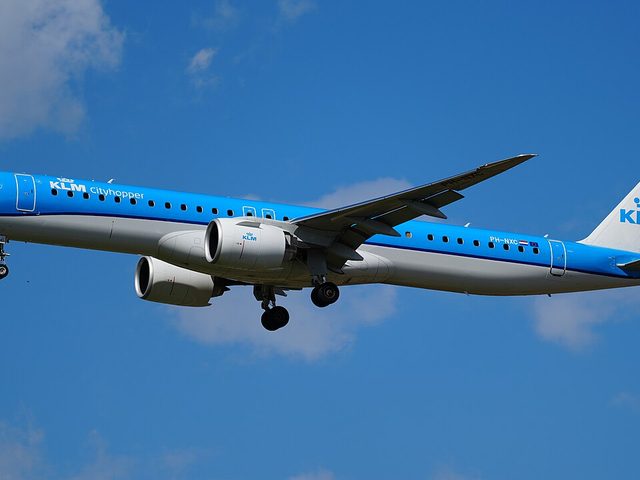
Embraer 190-E2
Twin Jet
The Embraer E190-E2 represents the Brazilian manufacturer's ambitious reinvention of its successful regional jet family, entering service in 2018 as the first of the second-generation E-Jets. Designated E290 under ICAO conventions, this twin-engine narrowbody introduced Pratt & Whitney's geared turbofan technology to the 97-114 seat segment, delivering a 17.3% improvement in fuel burn per seat over the original E190 while cutting maintenance costs and extending range to 2,850 nautical miles. The aircraft's distinctive shark-fin wingtips and fourth-generation fly-by-wire system mark a clear departure from its predecessor, though Embraer retained enough commonality to offer attractive transition paths for existing E-Jet operators. What sets the E2 apart in the crowded regional jet market is its focus on operational economics at the smaller end of the single-aisle spectrum, a niche increasingly squeezed between stretched turboprops and downsized A220s. The E190-E2 cruises at Mach 0.82 with a maximum operating altitude of 41,000 feet, matching jet performance expectations while burning roughly 25% less fuel than comparably-sized previous-generation aircraft. Its approach speed of approximately 132 knots and short-field capability make it particularly suited to secondary airports and thin routes where larger narrowbodies struggle with load factors. Adoption has been measured but strategic, with launch customers including Widerøe in Norway and Air Astana in Kazakhstan finding the type ideal for regional trunk routes and network densification. The E2 family competes directly with the Airbus A220 series, though Embraer positioned the E190-E2 at the lower end of the capacity range where seat-mile costs favor the smaller airframe. The type's relatively modest maximum takeoff weight of 124,780 pounds keeps it firmly in ICAO Wake Turbulence Category M, easing airport slot and handling constraints. SkyMeter has tracked 708 flights across 28 airframes and 1 operators spanning routes, with the largest observed operator.
Safety in context
The incident rate counts flights with ANY safety event detected by SkyMeter: go-arounds (a routine response, not a failure), unstable-approach gate flags (advisory thresholds), rejected takeoffs (the system working as designed), and runway events. It is NOT an accident rate or fatality rate. For accident statistics, refer to the NTSB Aviation Accident Database (USA) or the Aviation Safety Network. See methodology for what each event type measures.
Performance
Speed envelope & approach
Dimensions
Airframe geometry
Weight & identification
Operating limits
Top operators
By fleet size · last 7 days
No operator data available.
Safety profile
Flagged flights · last 7 days
Recent incidents
Flagged flights of E290


Recent flights
Real flights of E290 · airborne ≥ 20 min


