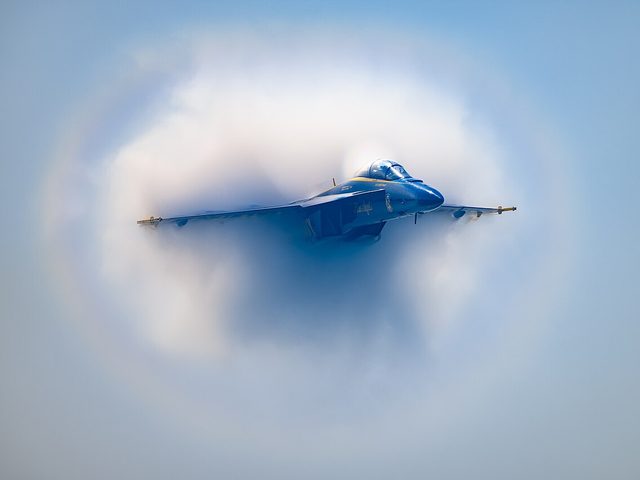
Boeing-Mcdonnell Douglas F/A 18 Hornet
Twin Jet· 273 globally registered
The Boeing F/A-18F Super Hornet is the two-seat strike fighter variant of the U.S. Navy's primary carrier-based multirole combat aircraft, representing a substantial evolution from the original Hornet design. Introduced in 1999, the Super Hornet is approximately 25 percent larger than its predecessor, features significantly upgraded engines (two General Electric F414 turbofans producing 22,000 pounds of thrust each), enhanced avionics, and expanded weapons payload capacity. It serves as both an air superiority fighter and precision strike platform, capable of speeds exceeding Mach 1.8 and combat radius approaching 450 nautical miles with external tanks. The F/A-18F's tandem cockpit configuration allows for a pilot and weapons systems officer, making it particularly effective for complex strike missions, forward air control, and suppression of enemy air defenses. The type has seen extensive combat deployment in operations over Iraq, Afghanistan, Syria, and Libya, and serves as the backbone of U.S. Navy carrier air wings alongside the single-seat F/A-18E. Beyond American service, the Super Hornet has been exported to Australia (as the F/A-18F) and Kuwait, with both nations operating the two-seat variant for its enhanced mission flexibility. The aircraft's design emphasizes carrier suitability with reinforced landing gear, folding wings, and an arrestor hook, while its fly-by-wire flight control system and leading-edge extensions provide exceptional maneuverability at high angles of attack. Maximum takeoff weight reaches 66,000 pounds, and the type can carry a diverse weapons load including AIM-120 AMRAAM air-to-air missiles, AGM-88 HARM anti-radiation missiles, Joint Direct Attack Munitions, and a centerline M61 Vulcan 20mm cannon. The Super Hornet remains in production and continues to receive upgrades including advanced electronic warfare systems, conformal fuel tanks, and integration with next-generation weapons, ensuring its relevance well into the 2030s. SkyMeter has tracked flights across airframes and operators over routes.
Safety in context
The incident rate counts flights with ANY safety event detected by SkyMeter: go-arounds (a routine response, not a failure), unstable-approach gate flags (advisory thresholds), rejected takeoffs (the system working as designed), and runway events. It is NOT an accident rate or fatality rate. For accident statistics, refer to the NTSB Aviation Accident Database (USA) or the Aviation Safety Network. See methodology for what each event type measures.
Performance
Speed envelope & approach
Dimensions
Airframe geometry
Weight & identification
Operating limits
Top operators
By fleet size · last 7 days
No operator data available.
Safety profile
Flagged flights · last 7 days
No safety data available.
Family
Related variants
Recent incidents
Flagged flights of F18H


Recent flights
Real flights of F18H · airborne ≥ 20 min


