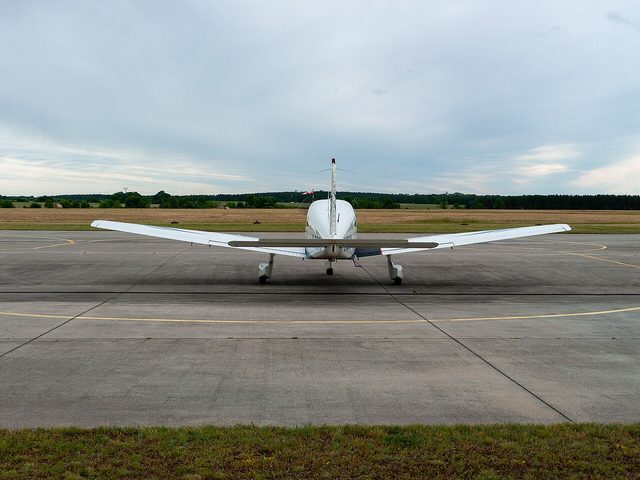
Piper Cherokee
Single Piston· 10,740 globally registered
The Piper PA-28 Cherokee is one of general aviation's most successful designs, introduced in 1960 as Piper's answer to the Cessna 172. Built around a low-wing configuration with a single piston engine and fixed tricycle gear, the Cherokee family became a training and personal-flying staple across six decades. The original Cherokee 140, 150, 160, and 180 models (all grouped under the P28A designator) offered pilots an affordable, stable platform with docile handling characteristics and a roomy cabin that seated four adults. Piper built more than 32,000 PA-28 variants over the years, making it one of the most-produced light aircraft in history. The type's simplicity and ruggedness earned it a reputation as a forgiving trainer, and thousands of pilots earned their private certificates in Cherokees. The PA-28-180 Cherokee, the most common variant under P28A, cruises around 125 knots on 180 horsepower, with a range of roughly 600 nautical miles and a service ceiling near 15,000 feet. Its Hershey-bar wing, a constant-chord design without taper, sacrifices some efficiency for predictable stall behavior and ease of manufacture. While later PA-28 models adopted tapered wings and fuel-injected engines, the early Cherokees remain ubiquitous on flight lines worldwide, prized for low operating costs and straightforward maintenance. The type's longevity is a testament to Piper's original design philosophy: build a simple, honest airplane that works. SkyMeter has tracked 41,627 flights across 5,760 airframes and 3,566 operators, with UND AEROSPACE FOUNDATION the largest observed operator.
Safety in context
The incident rate counts flights with ANY safety event detected by SkyMeter: go-arounds (a routine response, not a failure), unstable-approach gate flags (advisory thresholds), rejected takeoffs (the system working as designed), and runway events. It is NOT an accident rate or fatality rate. The P28A is widely used for primary flight training, so a substantial share of flagged events are stall-recognition practice and pattern-work go-arounds. That is normal training activity, not a safety-of-flight problem. For accident statistics, refer to the NTSB Aviation Accident Database (USA) or the Aviation Safety Network. See methodology for what each event type measures.
Performance
Speed envelope & approach
Dimensions
Airframe geometry
Weight & identification
Operating limits
Top operators
By fleet size · last 7 days


Safety profile
Flagged flights · last 7 days
Family
Related variants
Recent incidents
Flagged flights of P28A


Recent flights
Real flights of P28A · airborne ≥ 20 min


