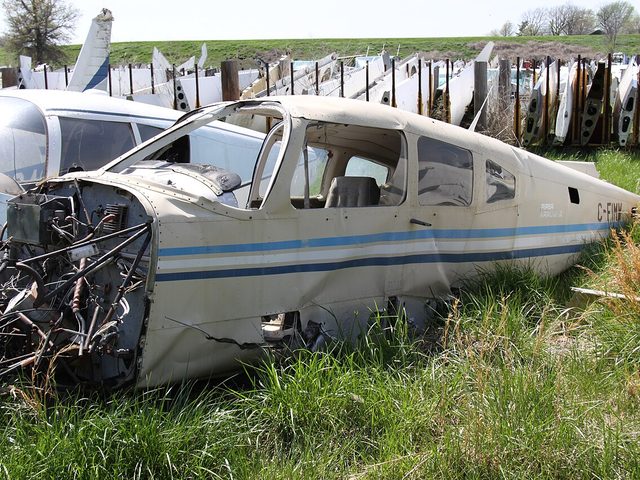
Piper 28t Arrow 4
Single Piston· 439 globally registered
The Piper PA-28RT-201T Turbo Arrow IV is a four-seat, single-engine retractable-gear aircraft that brought turbocharged performance to Piper's popular Arrow line when it entered production in 1979. Built in Lock Haven, Pennsylvania, the Turbo Arrow IV combines the proven Cherokee wing with a 200-horsepower turbocharged Lycoming IO-360 engine, retractable tricycle landing gear, and a T-tail configuration that distinguishes it from earlier Arrow variants. The turbocharger allows the aircraft to maintain sea-level power up to higher altitudes, making it particularly useful for mountain flying and cross-country missions where terrain or weather require operating above 10,000 feet. The Arrow IV serves primarily as a complex trainer and personal cross-country aircraft, offering pilots an affordable step-up platform to build retractable-gear and high-performance time. Its docile handling characteristics, forgiving stall behavior, and relatively modest operating costs have made it a staple in university flight programs and flying clubs across North America and Europe. The aircraft cruises at approximately 160 knots true airspeed at altitude, with a service ceiling around 20,000 feet, capabilities that made it competitive with Cessna's retractable singles during the 1980s. While Piper ceased Arrow production in 2009, the type remains popular in the used market, valued for its combination of speed, payload, and maintainability. SkyMeter has tracked 89 flights across 23 airframes and 12 operators, with Jeffery Richard Susin the largest observed operator.
Safety in context
The incident rate counts flights with ANY safety event detected by SkyMeter: go-arounds (a routine response, not a failure), unstable-approach gate flags (advisory thresholds), rejected takeoffs (the system working as designed), and runway events. It is NOT an accident rate or fatality rate. The P28T is widely used for primary flight training, so a substantial share of flagged events are stall-recognition practice and pattern-work go-arounds. That is normal training activity, not a safety-of-flight problem. For accident statistics, refer to the NTSB Aviation Accident Database (USA) or the Aviation Safety Network. See methodology for what each event type measures.
Performance
Speed envelope & approach
Dimensions
Airframe geometry
Weight & identification
Operating limits
Top operators
By fleet size · last 7 days


Safety profile
Flagged flights · last 7 days
Family
Related variants
Recent incidents
Flagged flights of P28T


Recent flights
Real flights of P28T · airborne ≥ 20 min


