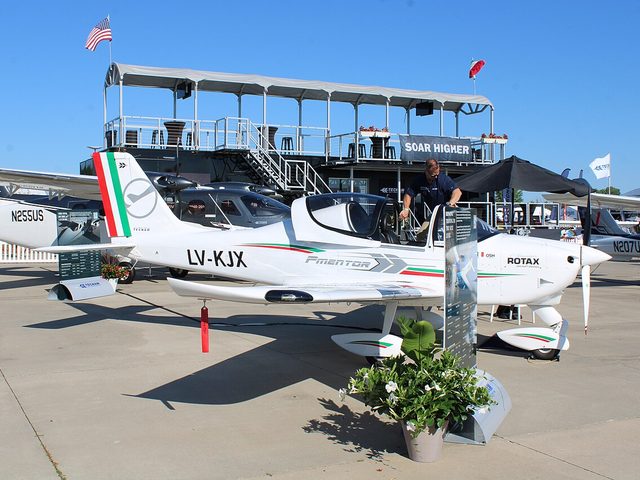
Tecnam P-Mentor
Single Piston
The Cirrus SR20 revolutionized general aviation when it entered production in 1999 as the first certified aircraft with an integrated whole-airframe parachute system, the Cirrus Airframe Parachute System (CAPS), designed to lower the entire aircraft and occupants safely to the ground in an emergency. Built by Cirrus Aircraft in Duluth, Minnesota, the SR20 is a four-seat composite single-engine piston aircraft that introduced modern glass-cockpit avionics and side-stick controls to the personal aircraft market, challenging the dominance of traditional metal trainers and touring aircraft. Its sleek composite construction and fixed tricycle gear made it both faster and more efficient than legacy designs like the Cessna 172, cruising at around 155 knots with a range exceeding 800 nautical miles. The SR20 became the training aircraft of choice for many flight schools and the foundation of Cirrus's product line, which later expanded to include the more powerful SR22. With a maximum takeoff weight of 3,050 pounds and a Continental IO-360 engine producing 200 horsepower, the SR20 operates comfortably in the light single-engine category, offering a blend of performance, safety, and modern avionics that redefined expectations for owner-flown aircraft. Its approach speed of approximately 77 knots and stall speeds in the mid-50s make it accessible to pilots transitioning from trainers, while the never-exceed speed of 200 knots and max structural cruising speed of 165 knots provide a respectable envelope for cross-country travel. SkyMeter has tracked 1,292 flights across 153 airframes and 26 operators, with REUVEN HAHN the largest observed operator.
Safety in context
The incident rate counts flights with ANY safety event detected by SkyMeter: go-arounds (a routine response, not a failure), unstable-approach gate flags (advisory thresholds), rejected takeoffs (the system working as designed), and runway events. It is NOT an accident rate or fatality rate. For accident statistics, refer to the NTSB Aviation Accident Database (USA) or the Aviation Safety Network. See methodology for what each event type measures.
Performance
Speed envelope & approach
Dimensions
Airframe geometry
Weight & identification
Operating limits
Top operators
By fleet size · last 7 days


Safety profile
Flagged flights · last 7 days
Family
Related variants
No related variants.
Recent incidents
Flagged flights of SIRA


Recent flights
Real flights of SIRA · airborne ≥ 20 min


