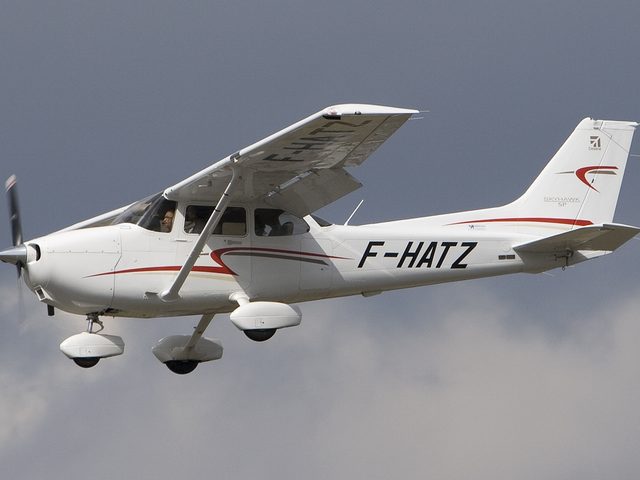
Cessna Skyhawk 172/Cutlass
Single Piston· 20,154 globally registered
The Cessna 172 Skyhawk holds the distinction of being the most-produced aircraft in history, with more than 44,000 airframes delivered since its introduction in 1956. Built by Cessna Aircraft Company as a four-seat, high-wing trainer and personal aircraft, the 172 became the backbone of flight training worldwide and remains in continuous production today, a manufacturing run spanning nearly seven decades. Its docile handling, forgiving stall characteristics, and rugged tricycle landing gear made it the default choice for ab-initio pilot training across six continents, and its ubiquity means more pilots have logged their first solo in a 172 than any other type. The Skyhawk's operating envelope is modest but practical: powered by a Lycoming O-320 or O-360 four-cylinder engine producing 150 to 180 horsepower, it cruises at around 120 knots, stalls at 40 knots in landing configuration, and has a never-exceed speed of 163 knots. Maximum takeoff weight is 2,550 pounds, and typical range is 500 to 600 nautical miles with reserves. The aircraft's simplicity (fixed landing gear, fixed-pitch or constant-speed propeller, manual flight controls) keeps operating costs low and maintenance straightforward, which explains its enduring popularity among flight schools, flying clubs, and private owners. While the 172 will never set speed or altitude records, its reliability and ease of operation have made it the most successful general aviation aircraft ever built. SkyMeter has tracked 77,202 flights across 9,052 airframes and 4,994 operators, with CHRISTIANSEN AVIATION LLC the largest observed operator.
Recent in the news
All news →- Crash Aug 14, 2026
How a new blood program helped 2 seriously injured in Kalamazoo plane crash - WZZM13.com
Safety in context
The incident rate counts flights with ANY safety event detected by SkyMeter: go-arounds (a routine response, not a failure), unstable-approach gate flags (advisory thresholds), rejected takeoffs (the system working as designed), and runway events. It is NOT an accident rate or fatality rate. The C172 is widely used for primary flight training, so a substantial share of flagged events are stall-recognition practice and pattern-work go-arounds. That is normal training activity, not a safety-of-flight problem. For accident statistics, refer to the NTSB Aviation Accident Database (USA) or the Aviation Safety Network. See methodology for what each event type measures.
Performance
Speed envelope & approach
Dimensions
Airframe geometry
Weight & identification
Operating limits
Top operators
By fleet size · last 7 days


Safety profile
Flagged flights · last 7 days
Recent incidents
Flagged flights of C172


Recent flights
Real flights of C172 · airborne ≥ 20 min


