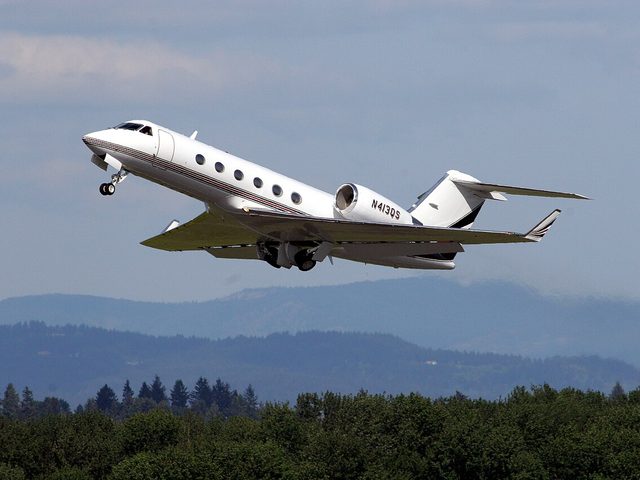
Gulfstream Aerospace Gulfstream Iv/G400
Twin Jet· 11 globally registered
The Gulfstream IV redefined intercontinental business aviation when it entered service in 1987, becoming the first purpose-built corporate jet capable of nonstop transatlantic range with eight passengers. Powered by twin Rolls-Royce Tay turbofans, the GIV introduced a glass cockpit to the Gulfstream line and stretched both fuselage and range beyond its GIII predecessor, achieving 4,220 nautical miles at Mach 0.80. Its 45,000-foot ceiling and Mach 0.88 maximum operating speed made it the benchmark for long-range business jets throughout the 1990s, competing directly with the Bombardier Global Express and later Dassault Falcon 7X. Gulfstream produced 535 GIVs and improved GIV-SPs between 1985 and 2003, with the SP variant adding 500 nautical miles of range and becoming the definitive model. The type found favor with corporations, heads of state, and charter operators seeking reliable transoceanic capability without the operating costs of airliners. Military derivatives include the U.S. Air Force C-20 series and Navy C-37A, used for executive transport and special missions. The GIV's Honeywell SPZ-8000 flight deck was revolutionary for its era, replacing analog instruments with CRT displays and introducing pilots to flight management systems that are now standard. Though production ended two decades ago when the G450 succeeded it, the Gulfstream IV remains a workhorse in corporate and charter fleets worldwide, prized for its durable systems, spacious cabin, and proven reliability. Its operating envelope (cruise speeds around 470 knots true airspeed, service ceiling of 45,000 feet, and approach speeds near 125 knots) strikes a balance between performance and efficiency that keeps older airframes economically viable. SkyMeter has tracked 1,869 flights across 438 airframes and 269 operators, with TVPX AIRCRAFT SOLUTIONS INC TRUSTEE the largest observed operator.
Safety in context
The incident rate counts flights with ANY safety event detected by SkyMeter: go-arounds (a routine response, not a failure), unstable-approach gate flags (advisory thresholds), rejected takeoffs (the system working as designed), and runway events. It is NOT an accident rate or fatality rate. For accident statistics, refer to the NTSB Aviation Accident Database (USA) or the Aviation Safety Network. See methodology for what each event type measures.
Performance
Speed envelope & approach
Dimensions
Airframe geometry
Weight & identification
Operating limits
Top operators
By fleet size · last 7 days


Safety profile
Flagged flights · last 7 days
Family
Related variants
Recent incidents
Flagged flights of GLF4


Recent flights
Real flights of GLF4 · airborne ≥ 20 min


