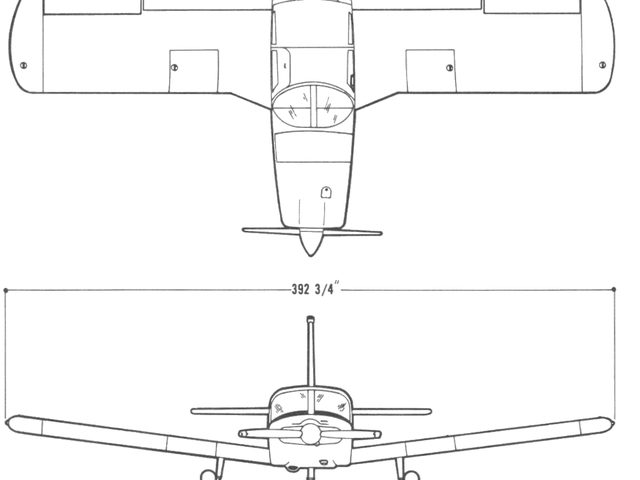
Piper Cherokee Six
Single Piston· 1,666 globally registered
The Piper PA-32 Cherokee Six and its successor, the Saratoga, represent one of general aviation's most successful six-seat single-engine designs. Introduced in 1965, the Cherokee Six was Piper's answer to the demand for a true family hauler: an aircraft that could carry six adults and their luggage without compromise. The original Cherokee Six featured a stretched fuselage, a 260-horsepower Lycoming engine, and a cabin wide enough for three-abreast seating, making it a favorite among flying clubs, air taxi operators, and families who needed more than the typical four-seat trainer could offer. In 1980, Piper refined the design into the Saratoga, adding a semi-tapered wing for better efficiency and a more modern instrument panel, while retaining the spacious cabin and solid load-carrying capability that made the type a workhorse. The PA-32 family spans several variants, from the fixed-gear Cherokee Six 260 and 300 models to the retractable-gear Lance and Saratoga II TC (turbocharged). Cruise speeds range from around 140 knots for the fixed-gear models to 170 knots for the retractable variants, with useful loads often exceeding 1,400 pounds, enough for full fuel and six occupants on many missions. The type's rugged construction, stable handling, and forgiving flight characteristics have made it a staple of flight schools, charter operators, and private owners who value utility over speed. While not as fast as a Bonanza or as sleek as a Cirrus, the PA-32 excels at the mission it was designed for: moving people and cargo reliably, comfortably, and economically. SkyMeter has tracked 2,121 flights across 613 airframes and 576 operators, with REDEMPTION INC the largest observed operator.
Safety in context
The incident rate counts flights with ANY safety event detected by SkyMeter: go-arounds (a routine response, not a failure), unstable-approach gate flags (advisory thresholds), rejected takeoffs (the system working as designed), and runway events. It is NOT an accident rate or fatality rate. The PA32 is widely used for primary flight training, so a substantial share of flagged events are stall-recognition practice and pattern-work go-arounds. That is normal training activity, not a safety-of-flight problem. For accident statistics, refer to the NTSB Aviation Accident Database (USA) or the Aviation Safety Network. See methodology for what each event type measures.
Performance
Speed envelope & approach
Dimensions
Airframe geometry
Weight & identification
Operating limits
Top operators
By fleet size · last 7 days


Safety profile
Flagged flights · last 7 days
Recent incidents
Flagged flights of PA32


Recent flights
Real flights of PA32 · airborne ≥ 20 min


