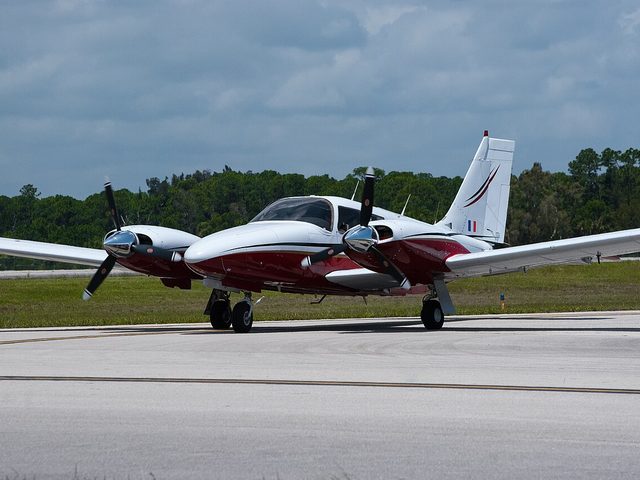
Piper Pa-34 Seneca
Twin Piston· 1,010 globally registered
The Piper PA-34 Seneca is a light twin-engine piston aircraft that has served as the workhorse of multi-engine training and light charter operations since its introduction in 1971. Built as Piper's answer to the need for an affordable, docile twin for stepping up from single-engine aircraft, the Seneca combined the fuselage of the Cherokee Six with counter-rotating engines to eliminate critical-engine concerns, a feature that made it particularly forgiving for pilots earning their multi-engine ratings. Over five decades and six major variants (Seneca I through V), the type evolved from carbureted Continental engines to turbocharged Continentals and later Lycomings, with gross weights climbing from 4,000 pounds in early models to 4,750 pounds in the current Seneca V. The Seneca's appeal lies in its predictable handling, relatively low operating costs for a twin, and generous cabin space that seats six adults. Its counter-rotating propellers eliminate the asymmetric thrust problems that define most light twins, making engine-out training less demanding and single-engine performance more benign. Cruise speeds hover around 190 knots at altitude with a range of roughly 800 nautical miles, positioning it between high-performance singles and cabin-class twins. The type found a loyal following among flight schools, air taxi operators, and owner-flown businesses that needed light twin capability without the fuel burn and maintenance complexity of larger aircraft. Today the Seneca remains in production as the Seneca V, one of the few piston twins still manufactured, and continues to dominate the multi-engine training market alongside the Beechcraft Baron and Diamond DA42. Its rugged construction, parts availability, and straightforward systems have kept thousands of airframes flying well into their fourth and fifth decades. SkyMeter has tracked 1,368 flights across 324 airframes and 236 operators, with PHOENIX EAST AVIATION LLC the largest observed operator.
Safety in context
The incident rate counts flights with ANY safety event detected by SkyMeter: go-arounds (a routine response, not a failure), unstable-approach gate flags (advisory thresholds), rejected takeoffs (the system working as designed), and runway events. It is NOT an accident rate or fatality rate. The PA34 is widely used for primary flight training, so a substantial share of flagged events are stall-recognition practice and pattern-work go-arounds. That is normal training activity, not a safety-of-flight problem. For accident statistics, refer to the NTSB Aviation Accident Database (USA) or the Aviation Safety Network. See methodology for what each event type measures.
Performance
Speed envelope & approach
Dimensions
Airframe geometry
Weight & identification
Operating limits
Top operators
By fleet size · last 7 days


Safety profile
Flagged flights · last 7 days
Recent incidents
Flagged flights of PA34


Recent flights
Real flights of PA34 · airborne ≥ 20 min


