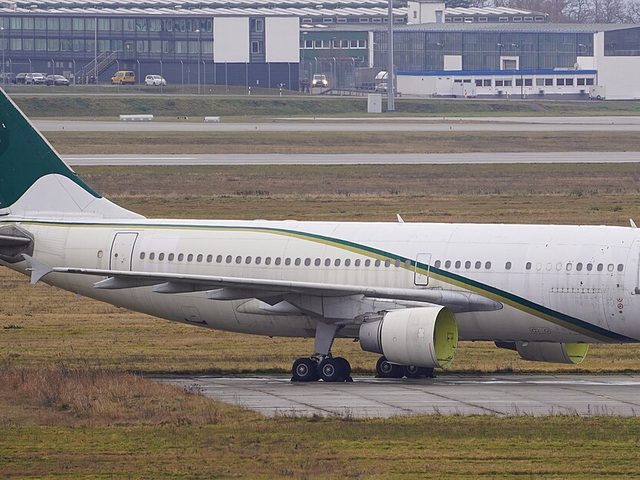
Airbus A310
Twin Jet· 26 globally registered
The Airbus A310 holds a pivotal place in aviation history as the aircraft that proved twin-engine widebodies could safely cross oceans. Introduced in 1983 as a shortened derivative of the A300, the A310 became the first twin-jet certified for 180-minute ETOPS operations in 1985, opening transatlantic and transpacific routes previously reserved for three- and four-engine aircraft. This regulatory breakthrough fundamentally reshaped airline economics and route planning, paving the way for today's long-haul twins like the 787 and A350. Airbus built 255 A310s through 1998, with the type serving both passenger and freighter roles across airlines worldwide. Powered by either General Electric CF6-80 or Pratt & Whitney JT9D turbofans, the A310 cruises at Mach 0.80 with a maximum operating speed of 350 knots IAS and Mmo 0.86. Its maximum takeoff weight of 346,125 pounds and typical range of 5,150 nautical miles made it ideal for medium- to long-haul routes with 200-280 passengers in two-class configuration. The A310 introduced advanced features for its era including a two-crew glass cockpit, composite materials in the tail, and a supercritical wing design that improved fuel efficiency over the A300. While most passenger A310s have retired from commercial service, the type remains active in military and government roles. Several air forces operate A310s as VIP transports, aerial refueling tankers (A310 MRTT), and medevac platforms. The sample registrations and callsigns suggest current operations include military transport missions and government flights, reflecting the A310's enduring utility in specialized roles decades after production ended. SkyMeter has tracked 102 flights across 11 airframes and 2 operators over routes, with ROYAL CANADIAN AIR FORCE the largest observed operator.
Safety in context
The incident rate counts flights with ANY safety event detected by SkyMeter: go-arounds (a routine response, not a failure), unstable-approach gate flags (advisory thresholds), rejected takeoffs (the system working as designed), and runway events. It is NOT an accident rate or fatality rate. For accident statistics, refer to the NTSB Aviation Accident Database (USA) or the Aviation Safety Network. See methodology for what each event type measures.
Performance
Speed envelope & approach
Dimensions
Airframe geometry
Weight & identification
Operating limits
Top operators
By fleet size · last 7 days

Safety profile
Flagged flights · last 7 days
Recent incidents
Flagged flights of A310


Recent flights
Real flights of A310 · airborne ≥ 20 min


