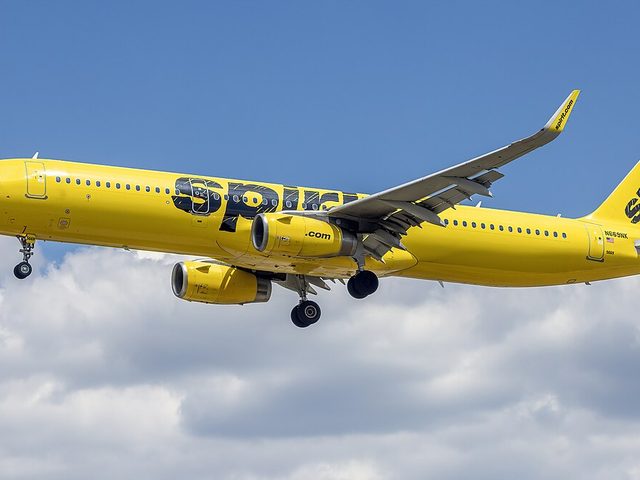
Airbus A321
Twin Jet· 491 globally registered
The Airbus A321 is the stretched, highest-capacity member of the A320 family, seating 185 to 220 passengers depending on configuration, making it the largest single-aisle airliner Airbus produces. Launched in 1989 and entering service with Lufthansa in 1994, the A321 was designed to compete directly with the Boeing 757-200 on high-density short- and medium-haul routes. Its 146-foot fuselage is nearly 23 feet longer than the baseline A320, yet it retains the same cockpit, systems, and type rating, allowing airlines to operate mixed A320-family fleets with maximum crew flexibility. The type proved so successful that Airbus developed the A321neo (new engine option) variant in 2016, which extended range to over 4,000 nautical miles and enabled true transatlantic capability (a first for a narrowbody airliner on many city pairs). The A321's performance envelope mirrors its A320 sibling: maximum operating speed of 350 knots IAS or Mach 0.82, service ceiling of 39,800 feet, and approach speeds around 138 knots. What distinguishes it is sheer capacity and efficiency on dense routes. The A321LR (long range) and A321XLR (extra long range, certified 2024) variants pushed the type into markets previously dominated by widebodies, with the XLR capable of flying up to 4,700 nautical miles, enough for New York to Rome or Los Angeles to London under favorable conditions. This range-capacity combination has made the A321 family the backbone of low-cost carrier expansion and legacy airline fleet renewal worldwide. The type's operational versatility is reflected in its ubiquity: major U.S. carriers like American and Delta operate large fleets for transcontinental and Caribbean routes, while European and Latin American airlines deploy it on everything from intra-European hops to transatlantic services. Its commonality with the A320 family means pilots transition easily, and its fuel efficiency (particularly in neo variants with CFM LEAP or Pratt & Whitney GTF engines) delivers up to 20 percent lower fuel burn per seat than previous-generation aircraft. SkyMeter has tracked 24,064 flights across 1,402 airframes and 25 operators on routes, with AMERICAN AIRLINES INC the largest observed operator.
Recent in the news
All news →- Emergency landing Aug 25, 2026
The Gimli Glider: Boeing 767 Dead-Stick Landing - MiGFlug
Safety in context
The incident rate counts flights with ANY safety event detected by SkyMeter: go-arounds (a routine response, not a failure), unstable-approach gate flags (advisory thresholds), rejected takeoffs (the system working as designed), and runway events. It is NOT an accident rate or fatality rate. For accident statistics, refer to the NTSB Aviation Accident Database (USA) or the Aviation Safety Network. See methodology for what each event type measures.
Performance
Speed envelope & approach
Dimensions
Airframe geometry
Weight & identification
Operating limits
Top operators
By fleet size · last 7 days


Safety profile
Flagged flights · last 7 days
Recent incidents
Flagged flights of A321
Recent flights
Real flights of A321 · airborne ≥ 20 min


